
Flyover Country

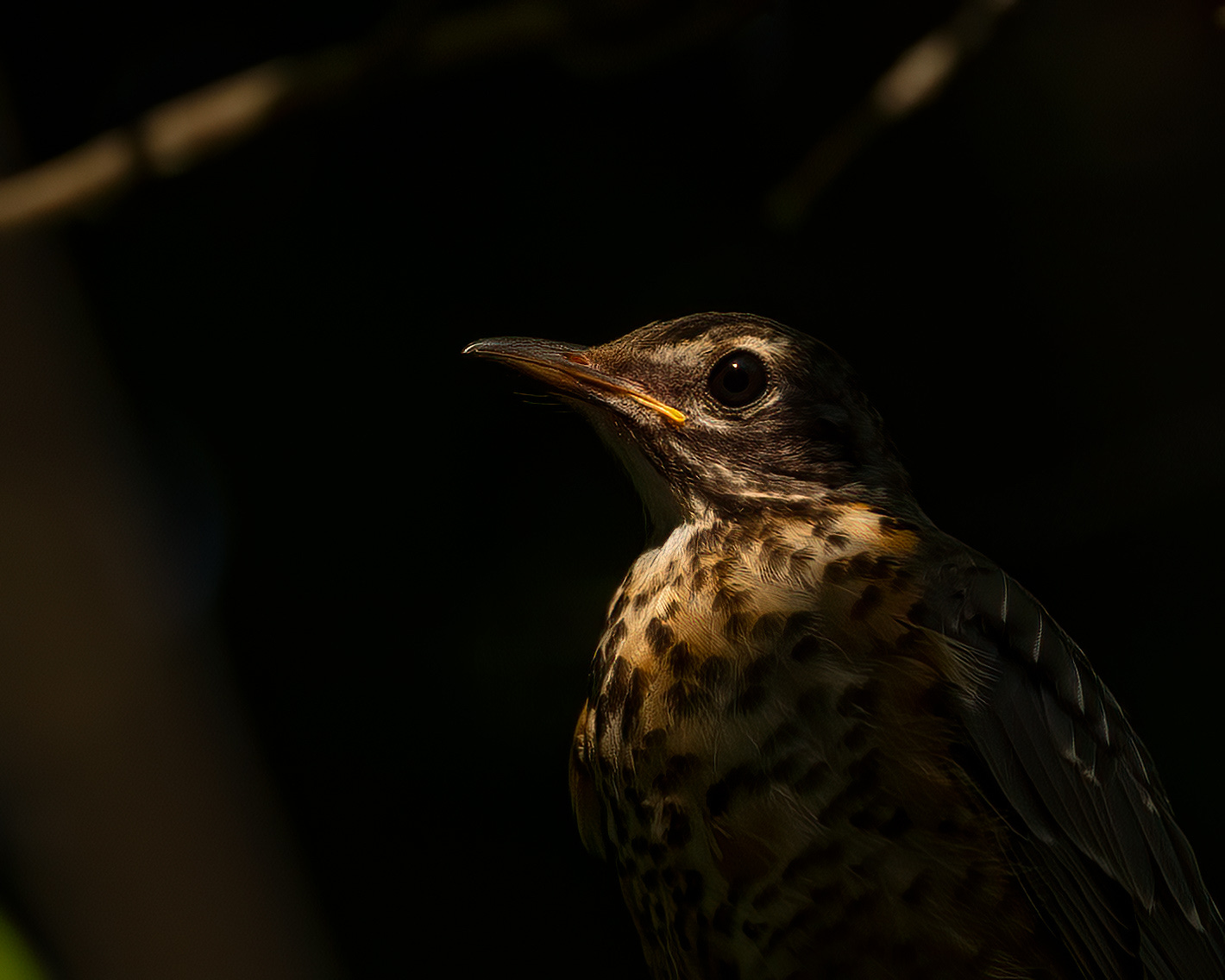
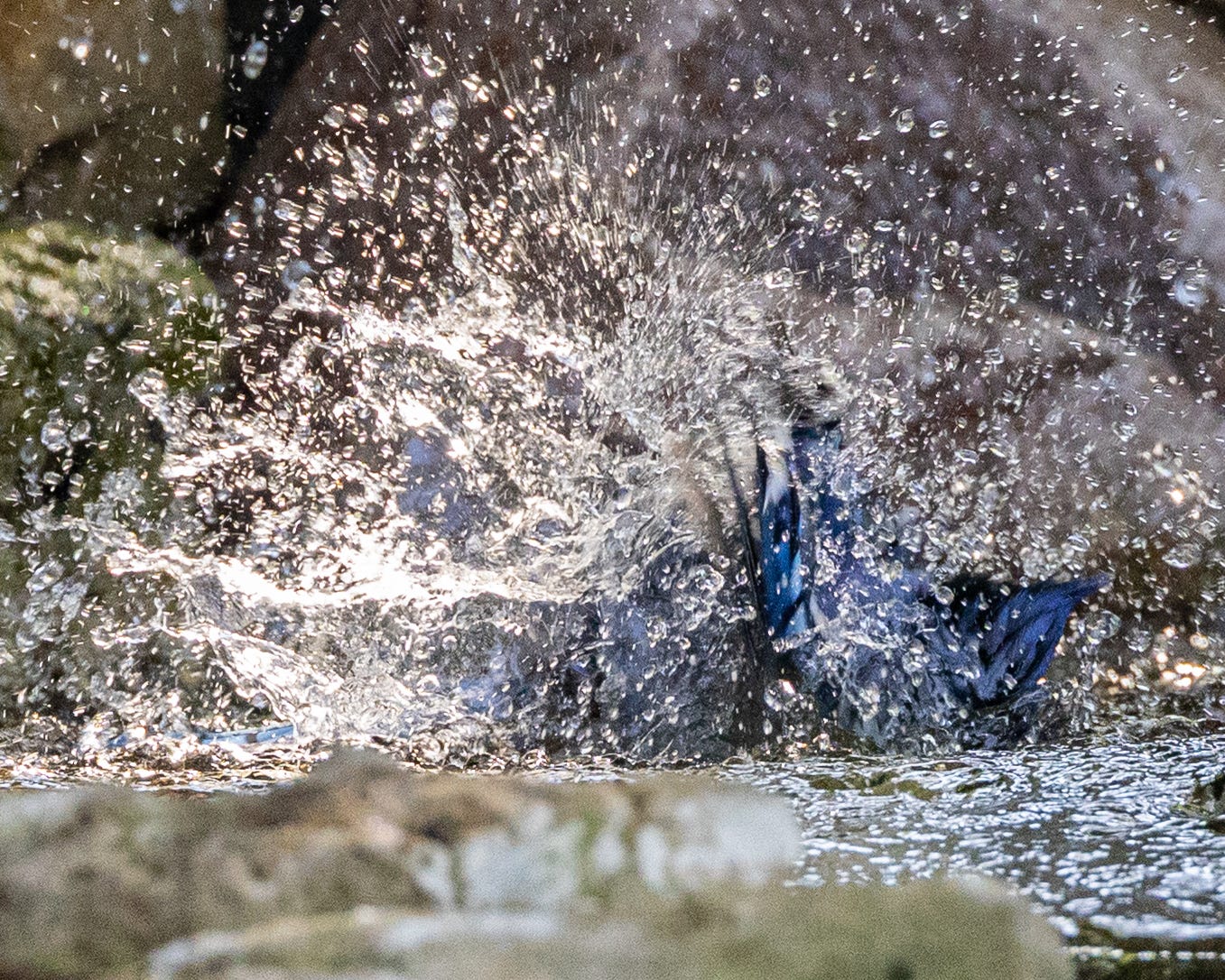
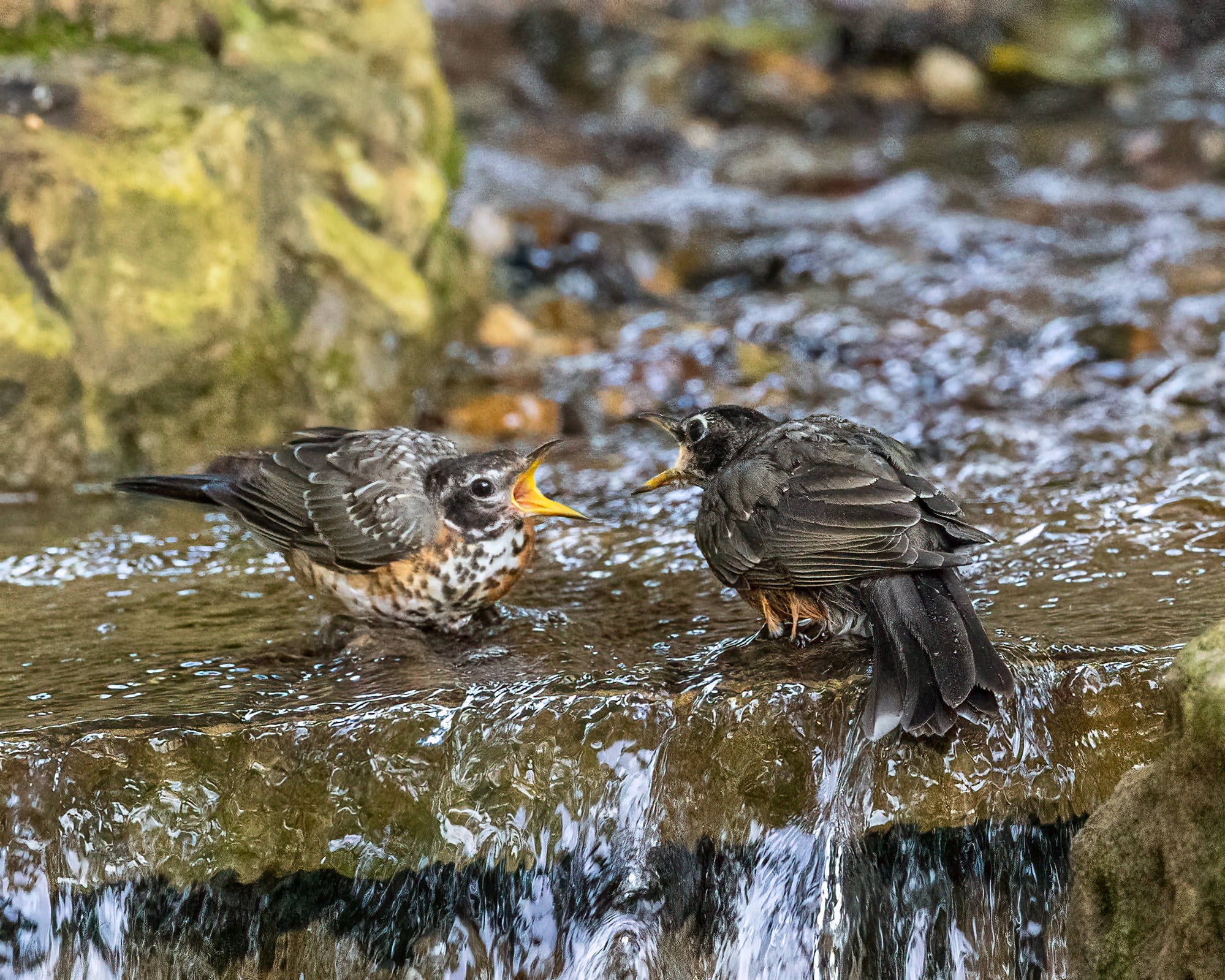
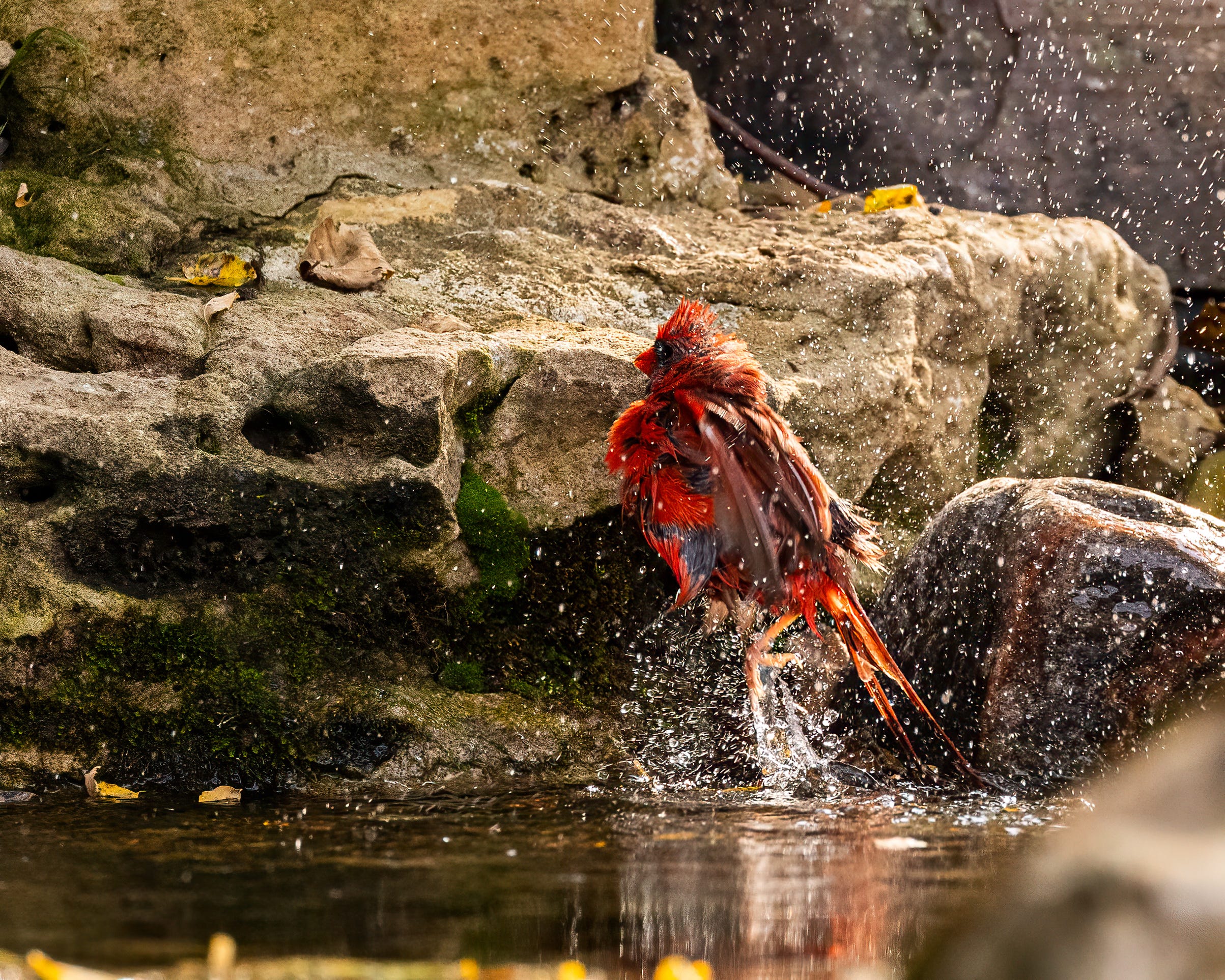
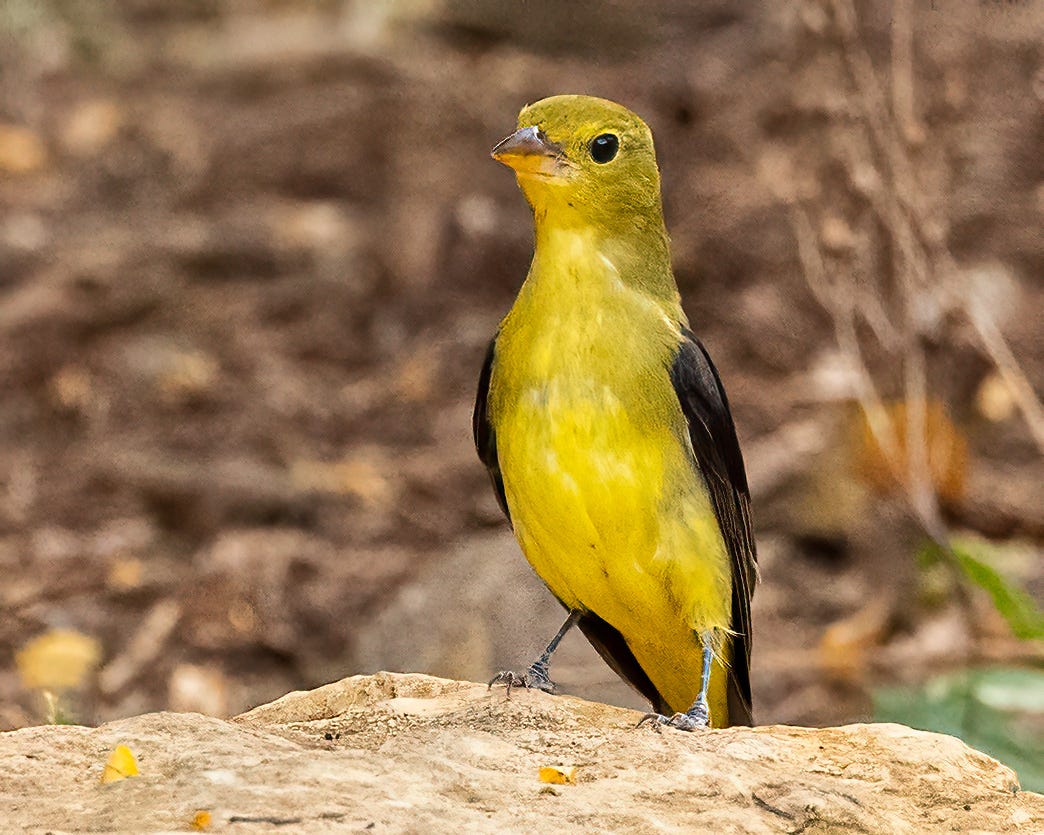
Fifteen American Robins, four Blue Jays, two Northern Flickers, a Cardinal, and a Scarlet Tanager are bathing in the creek. The robins are boisterous — calling loudly, chasing each other, posturing, and bathing. The Blue Jays are doing the same thing and it is hard to tell who is dominant. I watch robins displace blue jays and blue jays displace robins. Orange and blue blurred together, two strong personalities, each refusing to be vanquished. The male flickers are sticking their bills straight up in the air, displaying to each other between bouts of splashing in the water. The Scarlet Tanager is barely visible behind a large sandstone rock. The whole scene is veiled by silver sprays of water droplets glistening in the morning sun. I hold these moments close, absorbing every detail, knowing they are fragile. In this urban oasis, where my focused attention creates a world with no distractions, I know intimate encounters with birds are often fleeting.
I lose myself in moments like this. There is no road noise, no human voices, only birds. That is, until the bubble bursts.
Human voices break through the background din as they come up close behind me. I can tell they have turned off of the pedestrian path and are walking toward me. Their voices get louder as the voices of the birds get quieter. Despite the fact that I am sitting with my binoculars, and my camera, pointed at the creek, three college age men walk on by, turn, and go up the path next to the water, sending all the birds flying up into the trees. When the birds scatter, I feel it in my chest - not just frustration, but something deeper. A mix of sadness and fear held together by an ill-defined sense of unease. After all our work to create this beautiful urban sanctuary for the birds, most people still do not notice them. We have more work to do.
I have learned to take in each moment at this oasis as fully as I can, so I observe how birds and people interact. This is what I’ve learned.
Most people cannot be still. 95% of people walk up the path to the waterfall, pause for a few seconds, turn, and walk back down the path. These young men, phones in hand, follow the same pattern. They walk under trees full of raucous birds that they do not see. When they reach the waterfall, they mill around for about thirty seconds. I watch them and wonder, will they look, will they see, will their attention settle? Or, will they flutter through the canopy like a kinglet, always searching for the next thing? They turn and walk back down the path and over to the pedestrian trail. Three kinglets on the move.
In the space between the departing people and the return of the birds, I start to think about why I care so much about this project. Why am I sitting here? Part of the reason is that I’m learning that keeping common birds common—the robins and jays we take for granted—matters more than I realized.
Sitting in that silence, I remembered two scientific studies I recently heard summarized on the American Birding Association podcast. The first documented that migrating birds consider areas dominated by row crop agriculture to be fly over country. They behave the same way they do when flying over the Gulf of Mexico. They fly higher and faster, and they’re more tuned into tailwinds. Most birds are passing us by in the Midwest out of necessity — there is simply not enough food and vegetative cover left for them.
A second study discussed how it is more effective to focus on common species when making decisions on how best to conserve birds. These are the species that provide the bulk of ecosystem services. It’s also less stressful to enjoy the birds that you can reliably see than to constantly worry about the diminishing numbers of already-scarce rare birds. This means we should be paying more attention to robins, blue jays, flickers, and other common birds.
At one level, it is this fear of greatly diminished bird populations that motivates me. Just like water, tumbling over rocks, there are levels to my concern. Beneath the fear, lies grief, beneath the grief lies love.
I am searching for ways to break through the bedrock of my fear and grief, so I can access love. Articulating this dynamic helps, but that is just the first step. The real work happens in our bodies in relation to other beings.
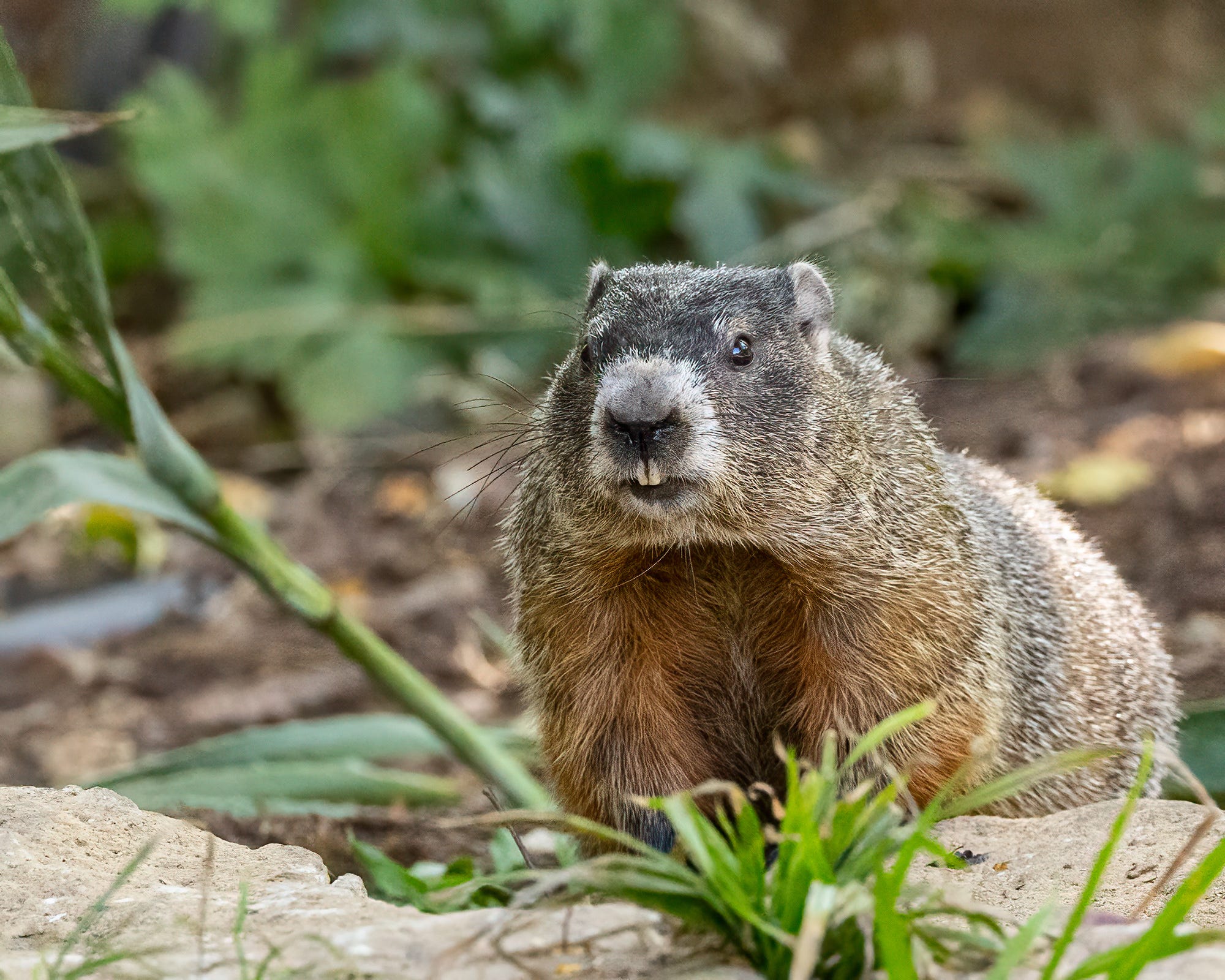
There is a moment of calm now. People have left the oasis, there are no emergency vehicles driving by with sirens running, and the omnipresent back-up beeps of nearby municipal trucks are mercifully at a remove. A large groundhog appears and casually walks out in the open to drink from the creek. The robins start to drop down out of the trees and onto the rocks. I take a closer look. Each robin is clearly unique. There are mature and immature birds, each with distinct plumage, and within all of them, there are subtle markings and varying shades of gray, orange, and white.
After a few minutes of appreciating robins, a posse of teenage boys roll up on their BMX bikes. I have seen these boys around town, and I know they are considered to be troublemakers. One of them looks at me with my camera and asks me to take his picture, which I did. Another asked me what I am looking at. I tell him about the robins, and I hold out my binoculars in front of him. He pauses, looks at me, glances at his buddies and takes hold of the binoculars.
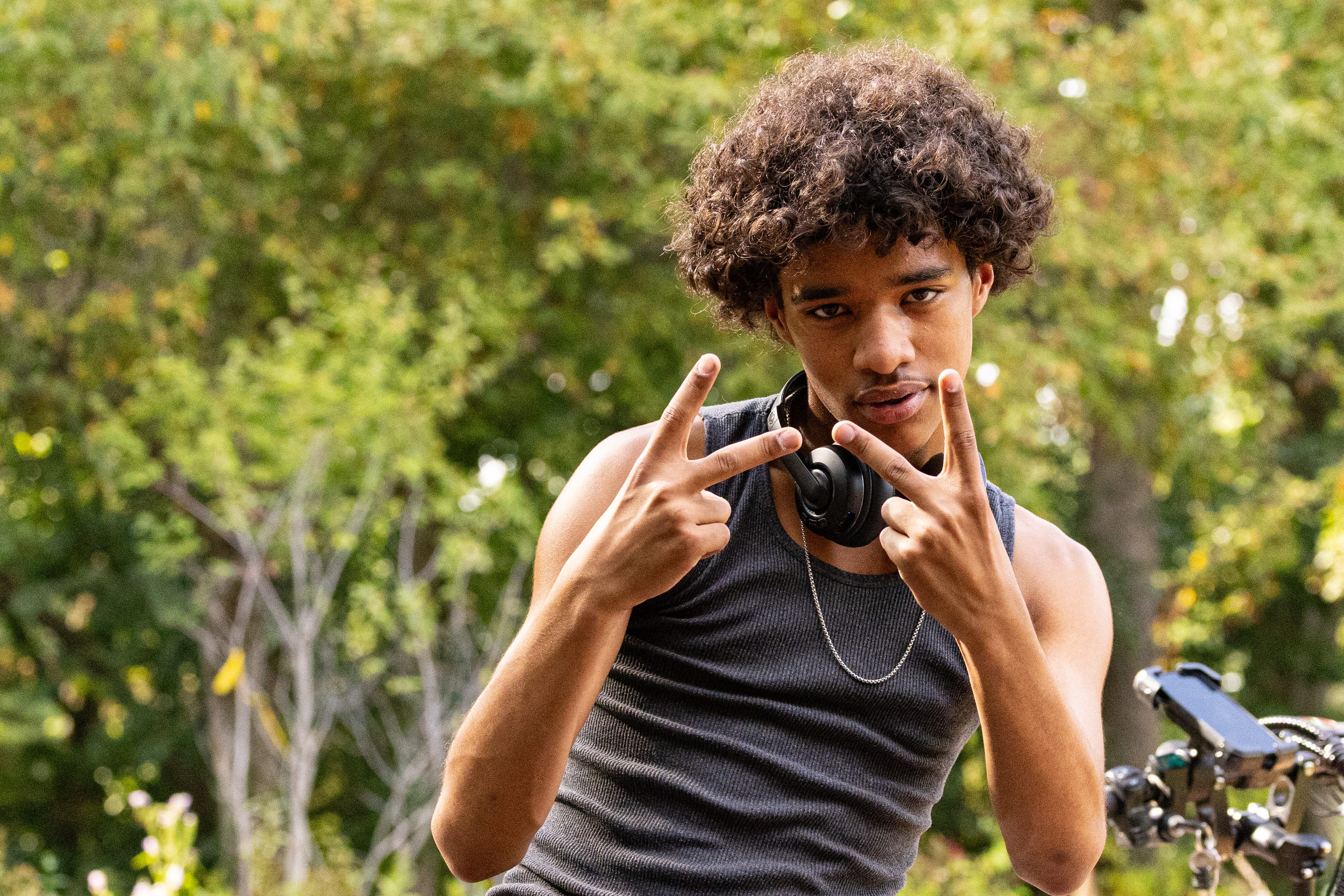
“I haven’t used binoculars since I used to go hunting with my grandpa,” he says, a moment of vulnerability revealing that he has not always been a cool 15-year-old. He scans the creek, and then with genuine excitement in his voice exclaims. “I see them! That is cool. I have never watched a bird take a bath before.” At this point, he hands the binoculars to his buddy. He has a similar reaction, and after they have all looked at the birds, they thank me and ride off down the trail. The words “that is cool” fill my mind, and I realized this is why I am here. These boys went from troublemakers to fellow birdwatchers thanks to our shared appreciation of robins. Together, we can cause some good trouble on behalf of the birds.
Maybe this is the work of conservation. Three boys, a dozen robins, and a little time and curiosity. If enough people share similar moments, the power of curiosity and connection will help us keep common birds common. My observations of people and birds points to the flighty nature of our attention spans as a barrier to connection. Like the migrating birds, we act as if our surroundings are flyover country, like the thing to see is always around the corner instead of right in front of us.
Our ability to be fully present has been taken away from us. The work of conservation begins with taking it back and learning to see common birds like robins and jays for what they are: living miracles that remind us what it means to be fully alive.
Your full presence is a gift - both to people and to birds. Love this encounter. It’s a “that’s all it takes” moment and a small miracle wrapped up in one.
I have had the opportunity to tell a few friends about the murmurations of starlings I have been gifted on my morning walks. Then I got to explain what a murmuration is…
Being an ambassador for nature is a pretty fun gig!
There is a Jane Goodall interview being aired on Netflix. She tells a story about a pair of sparrows in an airport — how most people didn’t notice, but she watched them for 10 minutes while the male, after numerous attempts, retrieved a crumb from the floor and fed it to its mate.
Thanks for sharing your love with us Bill. Your photos are a Friday delight!