

Mercy and I rented a cabin in the woods just outside of Pere Marquette State Park over Labor Day weekend. We planned to visit the National Audubon Society bird sanctuary on the Mississippi River, but the forecasted temperature for the day was 100°. I have never experienced 100° in Illinois, and the thought of being out in the open along the Mississippi lost its appeal, so we chose the shady woods instead. I had been intrigued by the eBird checklists from the Olin Preserve, owned and managed by The Nature Institute, so we headed there.
As we drove down a narrow rural road toward the property, I noticed that the driveway and buildings were well maintained. From the welcome sign, I learned this 450-acre preserve perched on the bluff above the Mississippi River was criss-crossed with hiking trails.
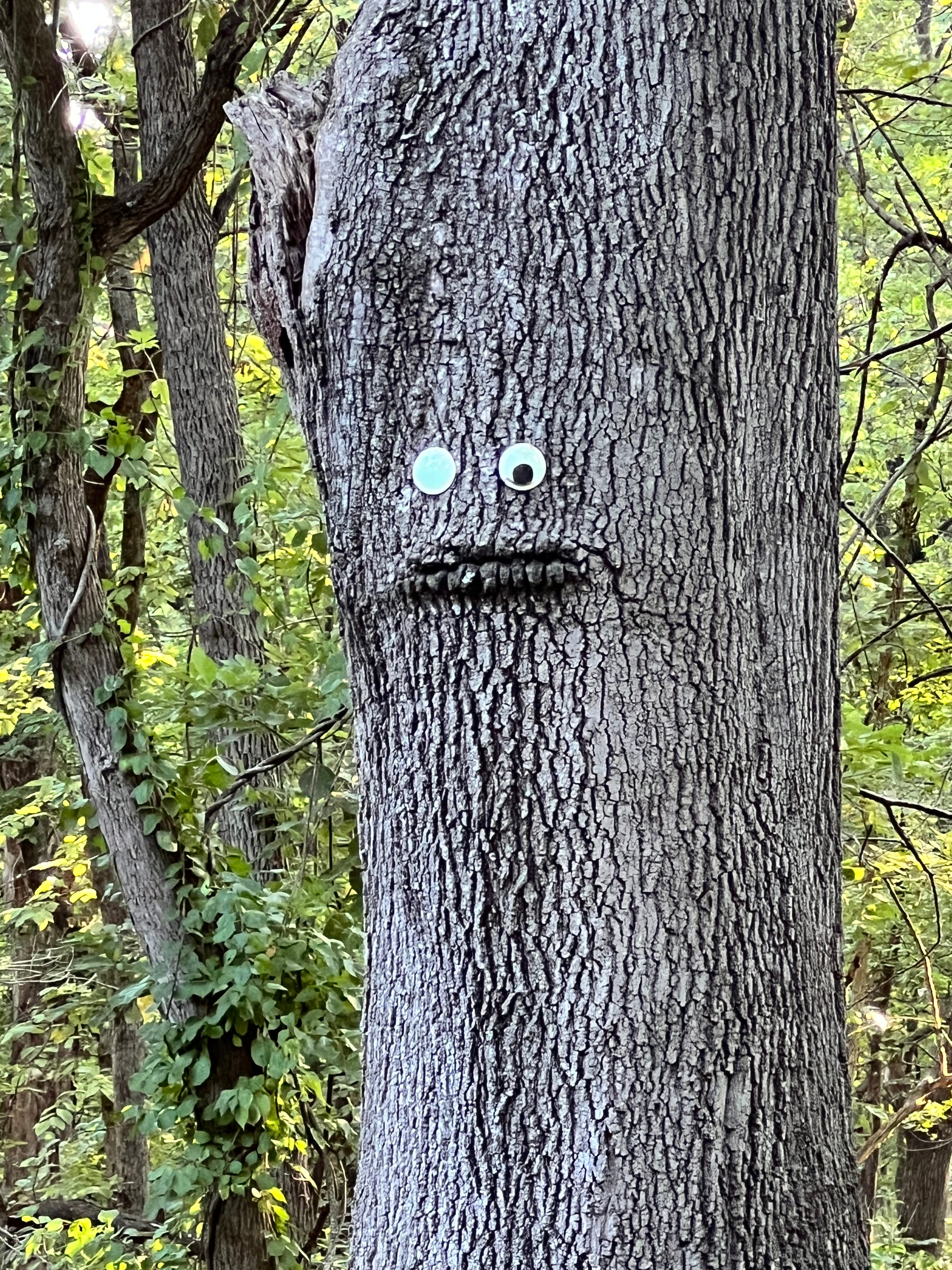
We started down the Frog Trail and were delighted to see that the local public library had installed a series of display cases filled with the pages of a beloved children’s book - I Want My Hat Back. The whimsy continued when we ran across a tree with the biggest googly eyes we’d ever seen.
Further down the trail, we entered into an open Oak woods, full of towering trees. We heard a Scarlet Tanager call, and while searching for it, Mercy spotted a Yellow-billed Cuckoo plucking hairy little caterpillars out of a web. Yellow-billed Cuckoos are one of the few birds that can eat hairy caterpillars. I told Mercy that they deal with the irritating hairs by periodically shedding their gut lining and regrowing a new one. Mercy said, “Gross.”
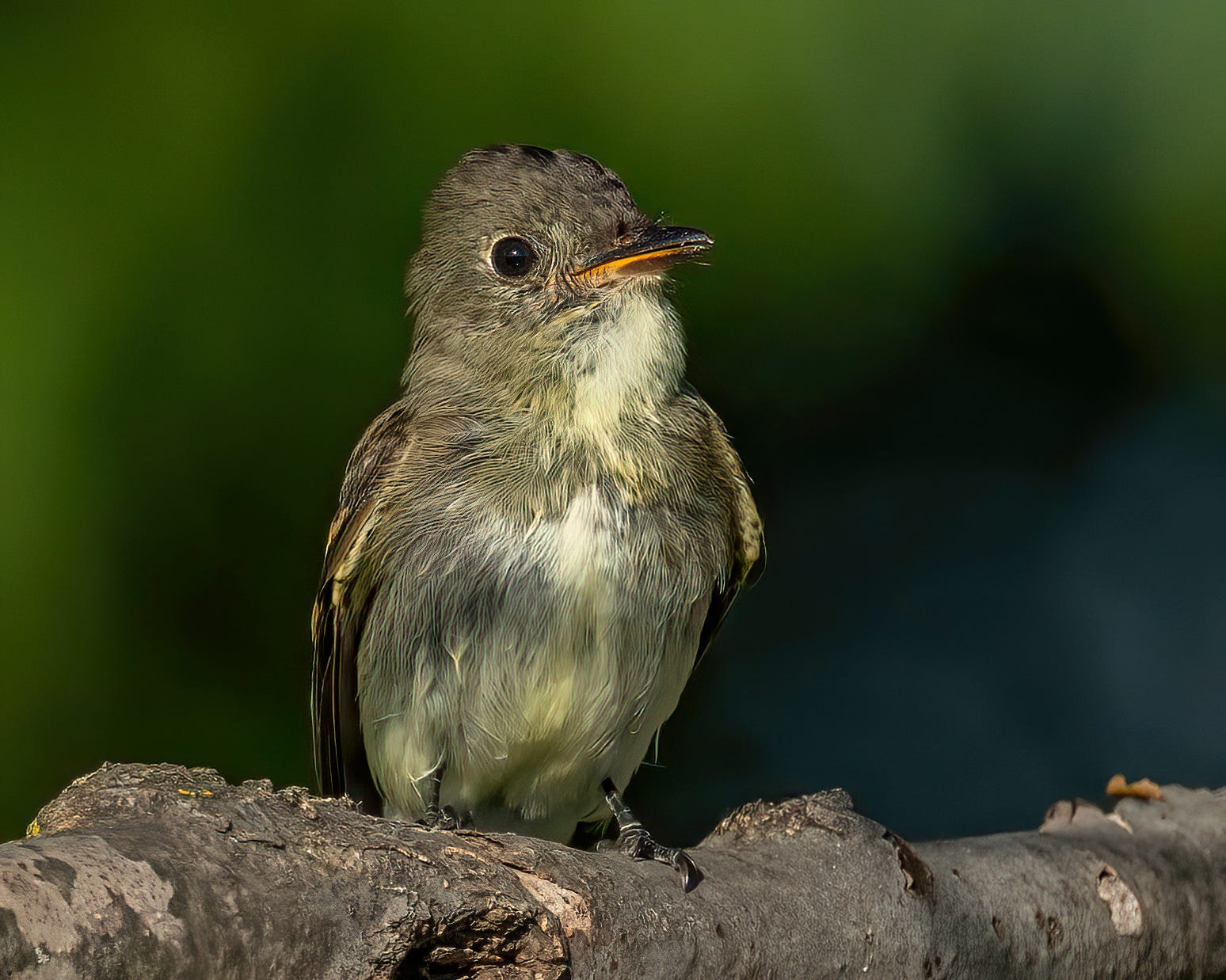
The woods were full of birds. I watched Warblers pluck caterpillars off leaves every few seconds. But the Pewees were the star of the show! Unassuming little flycatchers, the Eastern Wood-Pewees seemed to be everywhere. I watched a group of three Pewees chase each other while making squeaky noises when they came to rest. I watched an adult Pewee feed a juvenile. That got me curious - it was so late in the season for parental feeding - so I moved in for a closer look.
The Pewees were perched on dead branches in the lower canopy. They scanned for insects like other flycatchers by twisting and turning their heads like robots. They made short, quick movements with pauses in between as they tracked then focused on small, flying insects. When they decided to chase, an aerial ballet ensued. They launched off the branches with long wings flapping, gliding, and fluttering in pursuit of prey. They hovered and sometimes dropped like a falling leaf.
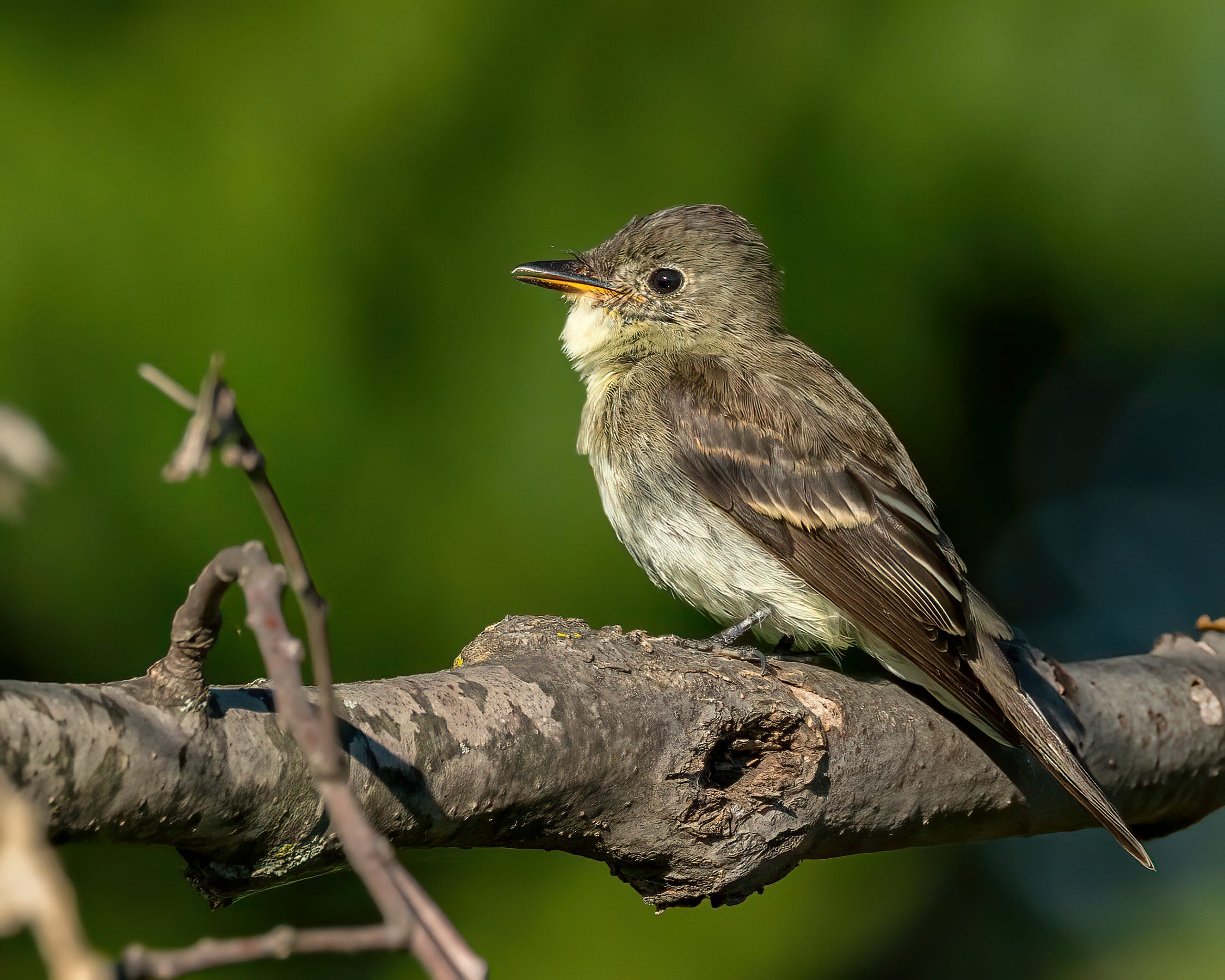
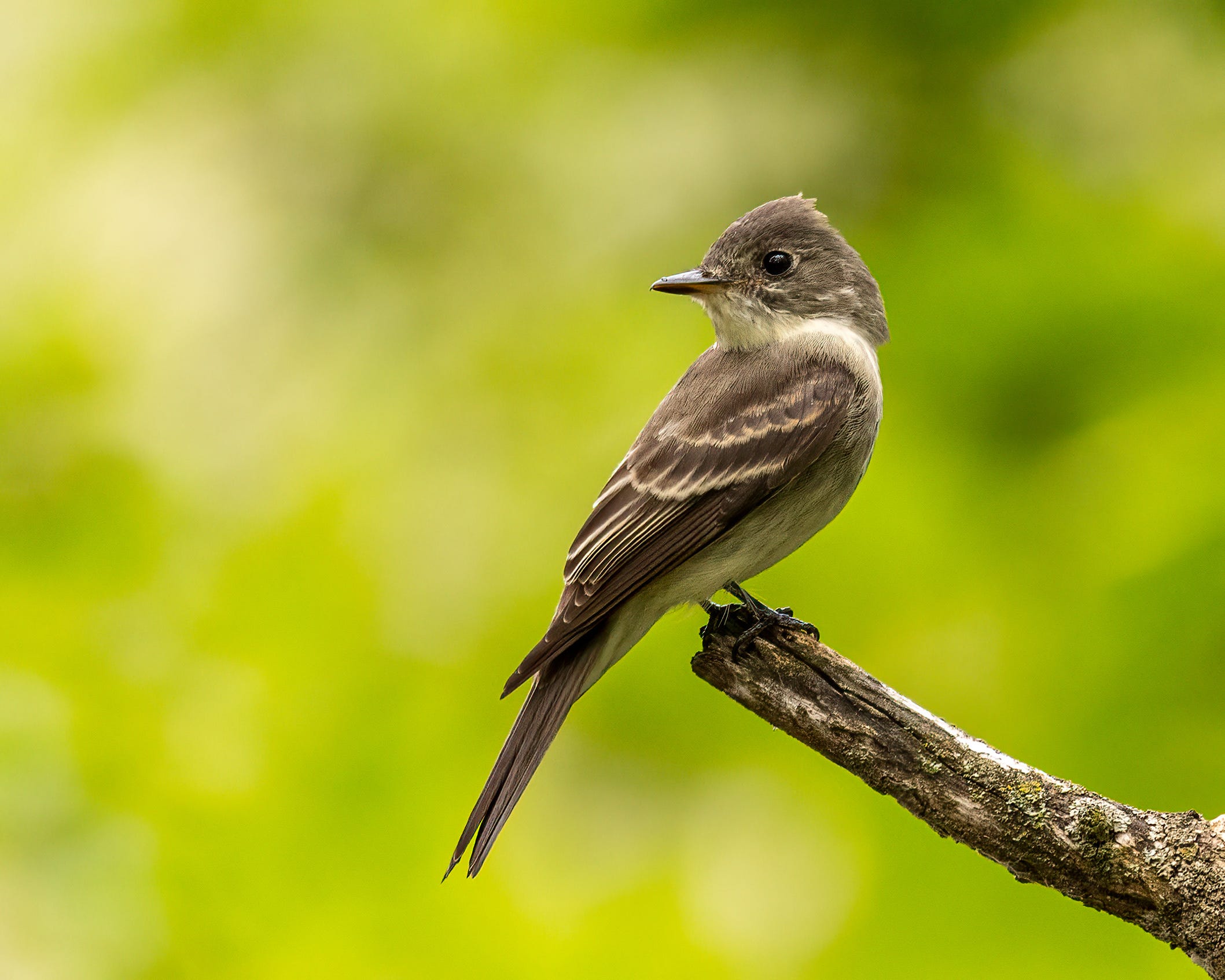
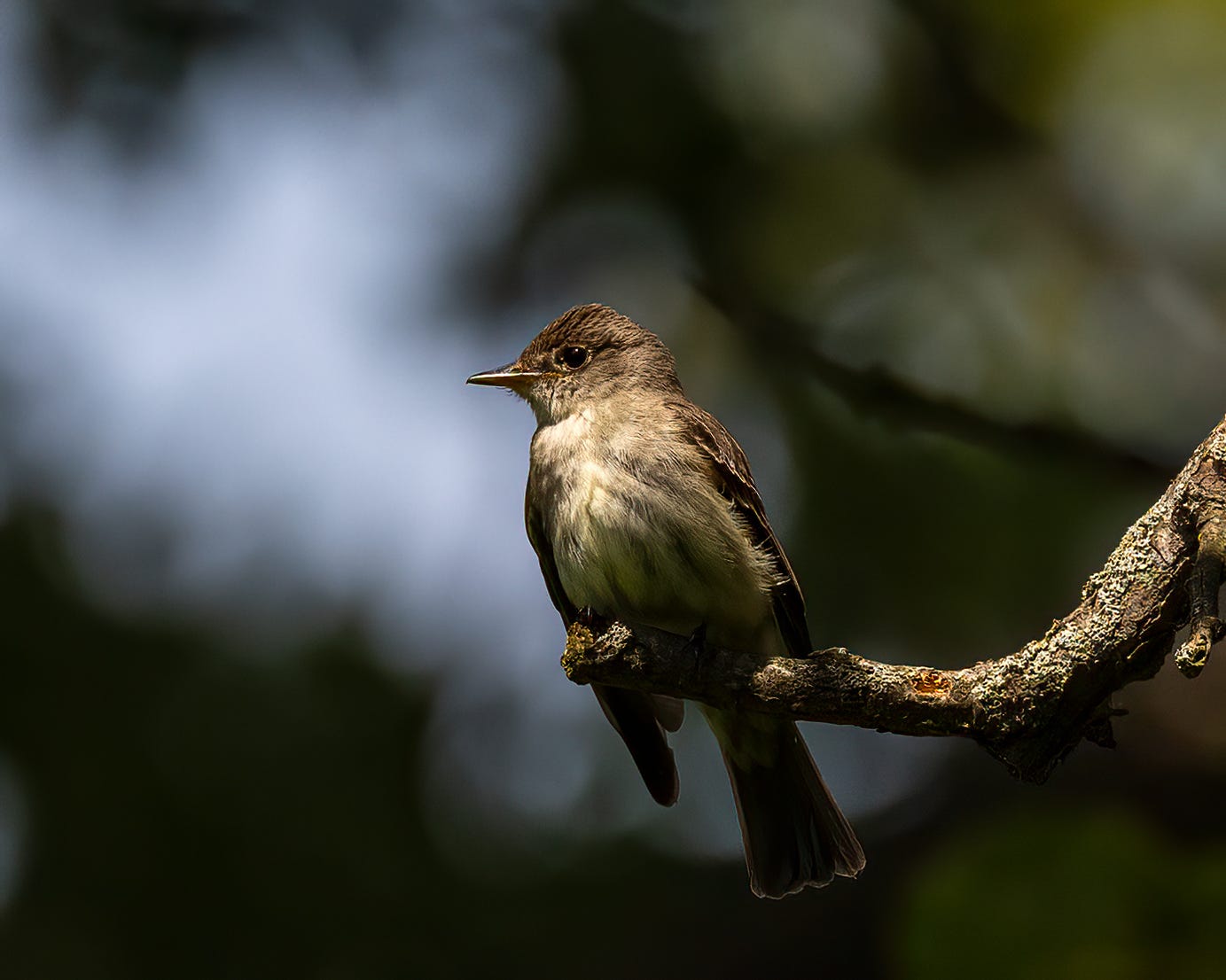
All the while, they sang, “Pee ah wee! Pee ew.” Pure whistled notes that carried through the canopy. Unlike most songbirds, the Pewee’s songs are innate, not learned. They come out of the egg singing. The song seems simple at first, but if you listen closely, you will hear three different songs.
I noticed that the mix and order of song one (pee-ah-wee) and song two (pee ew) varied, but I could not discern any context or reason for the shifts. I did notice that a Yellow-throated Vireo singing nearby never overlapped with the song of the Pewee. It seemed they were taking turns.
We hiked 3 miles of trail until the 100° temperature was too much for us. I did not see a single, invasive Honeysuckle shrub on our hike. The dominant shrubs were natives - Spicebush and Sassafras and Dogwood. Near as I could tell, all 450 acres had been well-managed for decades.
When we got back to the car, I searched for restaurants nearby and found one described as a “European-style patisserie.” Intrigued as to how that could possibly be the case in rural southern Illinois, we drove the 10 miles and found ourselves at a beautiful old house on the edge of town. What was once an 1800s living space was now an air-conditioned dining area with a display of pastries that looked like it had been teleported straight from France. The chef came out and described the pastries to us. The name “Kieran McGuane” embroidered onto his chef’s jacket was a hint as to his probable origins, but his accent confirmed it. Chef McGuane had relocated from Dublin.
We sat down on antique chairs and perused the menu. Mercy decided to go all in and order the full Irish breakfast. I kept it simple and ordered two poached eggs. Chef McGuane slid her plate onto the table in front of her: bacon, three types of sausage, poached eggs, baked beans and white toast covered her plate. We both stopped and stared. Mercy looked up, smiled and shrugged her shoulders. There was enough cured meat on that plate to feed a family of five. (To be fair, she was not sure what rashers were nor the black and white pudding.) We finished by eating an extravagant amount of pastry before heading back to the cabin.
With the temperature set to blazing for the rest of the day, I spent the afternoon reading about Pewees. I learned that they build small lichen-covered nests high in the canopy. From the ground, their nests look like a knot on a limb. The combination of a high, camouflaged nest, the fact that Pewees spend a lot of time sitting still, and both sexes appearing similar means that they are hard to study. Much of their lives remain a mystery. I did learn that they sing a twilight song - “Ah di dee” - from the same perch before sunrise and after sunset. I figured we’d need to be at the Olin Preserve by 6 AM to have a chance of hearing the twilight song, which means we’d have to leave the cabin by 5:30 AM.
I wondered if this song would be subtle and understated, a bird announcing to its mate and the world that it had survived another night, and that this space was still his. Could I hear that in three plain notes? The cabin was one room, with the bed right there by the kitchen. I got up at 4 AM and tried to be considerate, using my phone flashlight to start making breakfast. Mercy did not stir. As time went on I became increasingly eager to get going, so I turned on a light. Still no movement. I made a little noise. Still no movement. I figured her full Irish breakfast must be weighing her down. When she awoke, I learned that she was not as excited about hearing the Pewees’ twilight song as I was. We took our time eating breakfast, and we arrived at the preserve at 7 AM.
I quickly confirmed some of my new knowledge about Pewees: they are polite birds. They wait for other birds to stop singing before they sing. The length and order of their strings of songs carry meaning. Long runs of “song one” mean they are foraging alone; shorter runs with an increase in “song two” means they are close to another Pewee.
Their seemingly simple songs are not so simple. Birds can discern more acoustic details than we can, and female birds can tell one male’s song from another. The female Pewees are likely evaluating the quality of the male Pewee’s song, the quality of his territory, and other factors that we don’t yet understand.
With the variety of Pewee songs all around us, we walked up to the trail map at the edge of the woods. I could hear the Pewees mostly singing their “pee ah wee” songs. I guessed they must’ve stopped the twilight song sometime around 6:15. Mercy took one look at the map and said, “Let’s do the big outer loop that goes past the waterfall.” We set out on the trail with Pewees calling.
I love this - I’ll never take Peewees for granted again!
Beautiful!!