

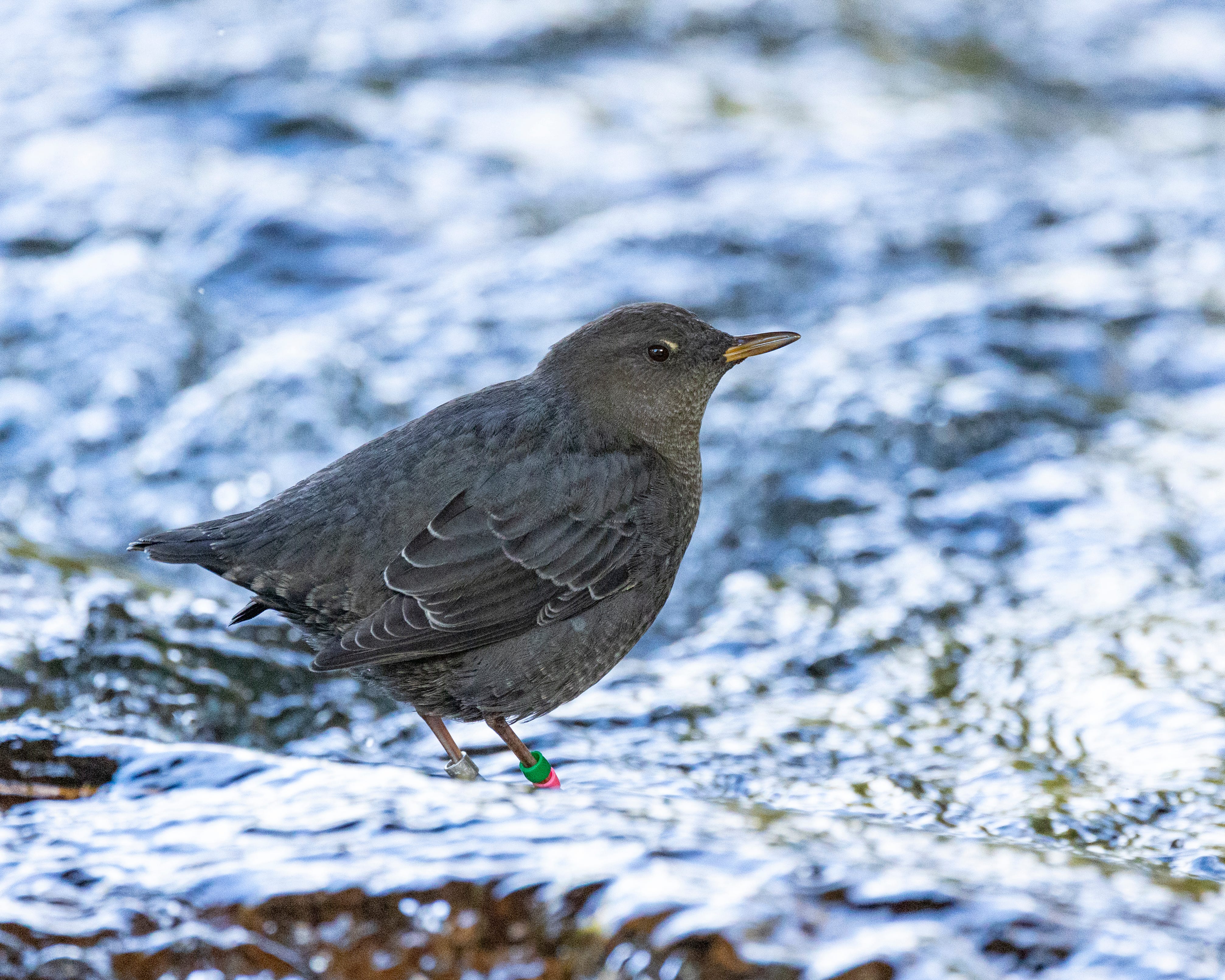
My sister gave me and Mercy a tour of Spearfish Canyon in South Dakota. My Illinois eyes were delighted by the tree-covered peaks and crystal clear water. Our first stop was Roughlock Falls where I parted Red Osier dogwood branches to get a view of the rushing water in Little Spearfish Creek. Further down the trail, we all paused to take in a high-pitched, tinkling ribbon of a song coming from the creek. We scanned the water and banks, hoping to spot the singer, an American Dipper. We moved in closer and came to an opening with a view of a glass-like pool where trout appeared to hang in the air.
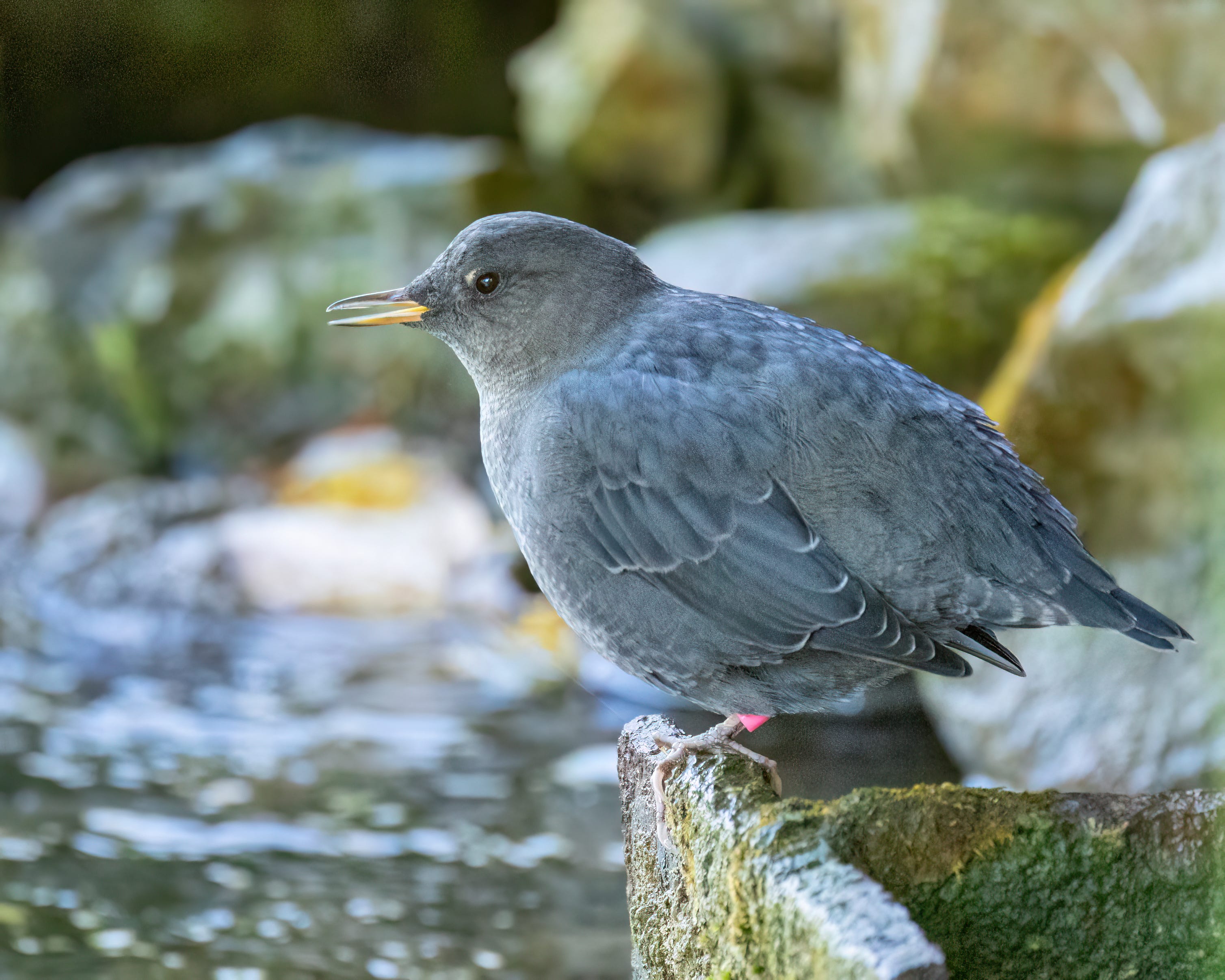
I spotted the Dipper perched on a branch above the water. North America’s only aquatic Songbird was in his element. He was a boisterous, round gray stone of a bird, ready to fly below the surface of the water.
I was thrilled and hoped I could photograph him, but I moved too quickly and sent him flying off down the creek.
We spent several days hiking trails along beautiful little creeks, hoping to see Dippers. The habitat looked good to me, but we never saw a Dipper.
Conversations with a few of my sister’s friends helped me figure out why the Dippers seemed scarce. Jeremy is an organic farmer and bird watcher who farms in Spearfish. He told me that Cleopatra Bridge is the best place to see Dippers. I had driven past the spot several times, but was put off by its proximity to a busy road, packed parking lot, and popular trailhead. In the summer months, 1,000 people per day hike the trail up Cleopatra Creek. I thought I could find alternative spots better suited to an introvert.
We had dinner with Nate and Michele, two more of my sisters friends who live in Spearfish and have a cabin in the national forest. They told us most of the national forest is logged, grazed, and crisscrossed with logging roads and ATV trails. These activities all increase silt in creeks, and the silt settles down in the cracks and crevices among the rocks, where it smothers insects. This removes the Dippers’ food and the Dippers themselves.
There are approximately 70 Dippers in the Black Hills of South Dakota. They were once found on all the larger streams, but are now mostly found in sections of Spearfish Creek and its tributaries. The Dippers, like us, need clean water to survive. Their declining numbers are a reflection of our relationship to the land. If the Dippers disappear, the creeks will be lonely and without song.
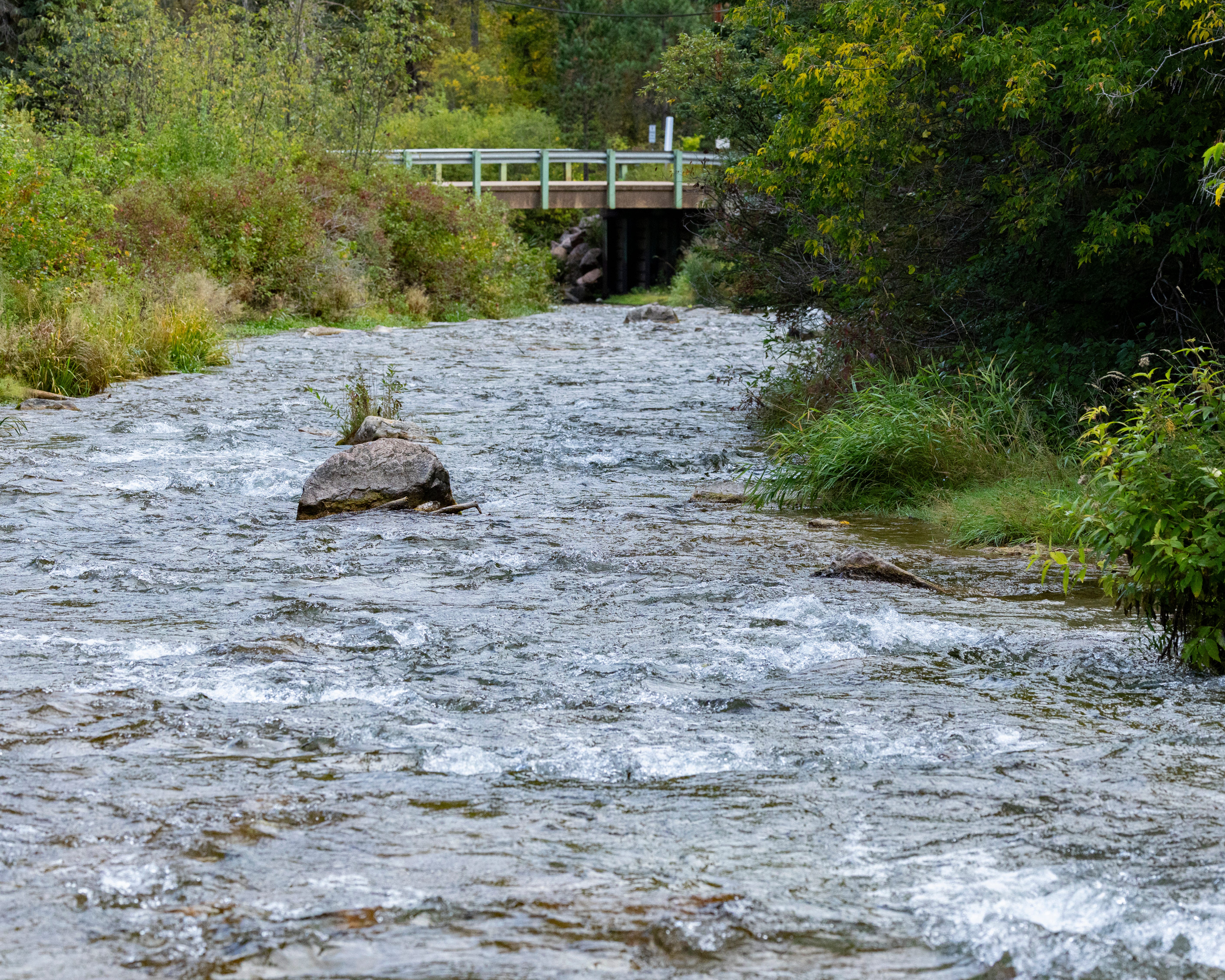
Early the next morning, we pulled into the Cleopatra Creek trailhead parking area. Spearfish Creek tumbled through the canyon at the base of sheer rock faces that rose up around us. Pine trees covered the slopes. We slowly walked the well-trodden trail between the road and creek, and at every opening in the vegetation, we stopped to look at the creek in hopes of seeing a Dipper. After a few hundred yards, we approached a rapids, and the air filled with the sound of water flowing over rock.
Rollicking whistled notes sparkled amidst the rush and roar. The song faded in and out and was hard to locate. We weren’t sure if we were hearing the song of a bird or the creek.
We made our way down to the bridge and looked up and down the creek. After 10 minutes, I noticed a small gray spot next to a large boulder in the middle of the creek. Two hundred yards upstream that little round spot was dancing. It was a Dipper!
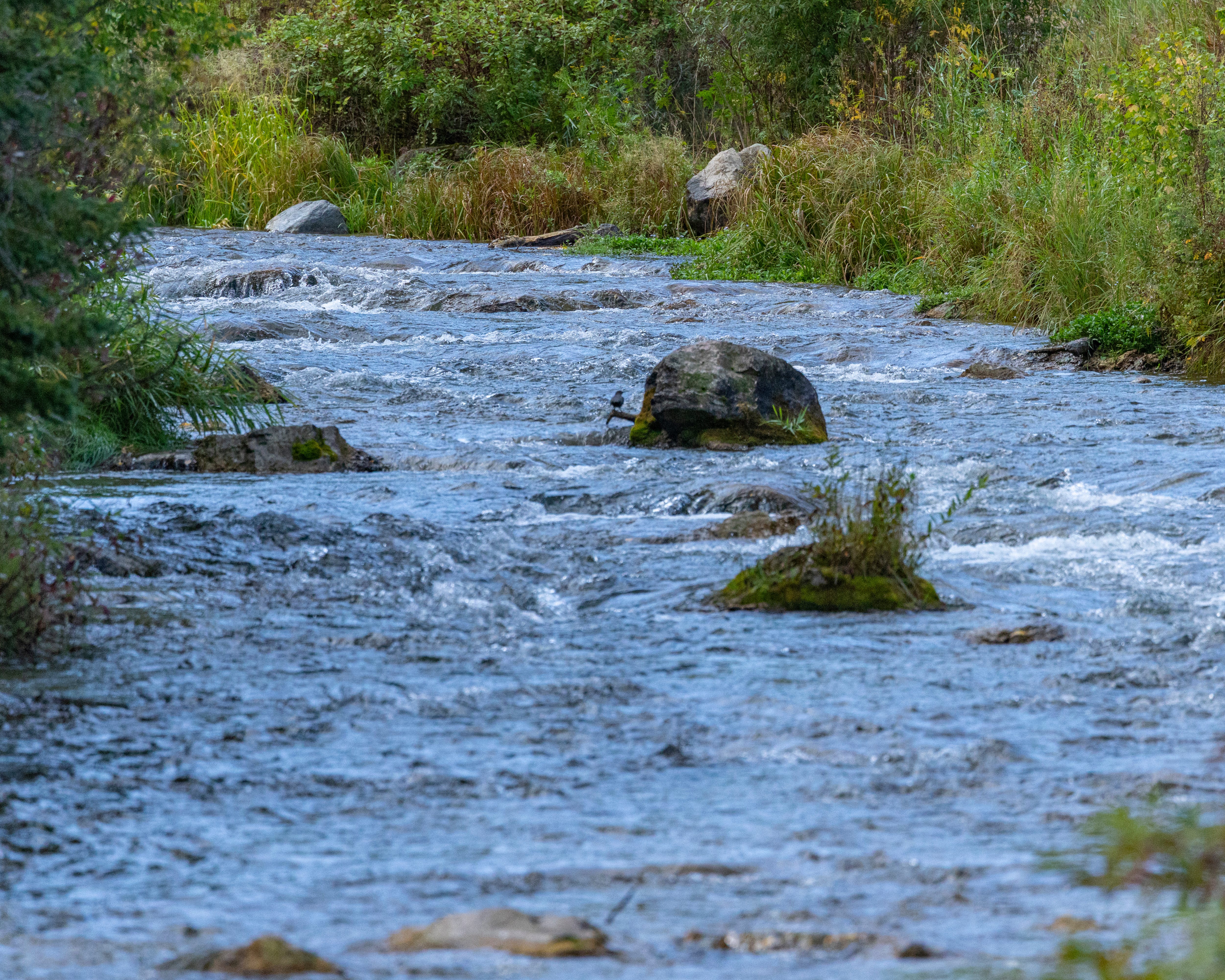
He starts to come toward us, so I scramble down large jumbled rocks, stand next to the creek, and wait.
He faces upstream and dips his head, and occasionally his entire body, underwater to look for insect larvae. When he drops below the surface, he enters the calm, slower flow that threads through stones. He enters the life of the creek, where he probes and flips stones to find insects; then he lets go and pops up into the bright light and turbulent water, where he is equally at home. The water carries him until he finds a foothold and stands still on a rock, calm, dignified, and graceful as flowing water.
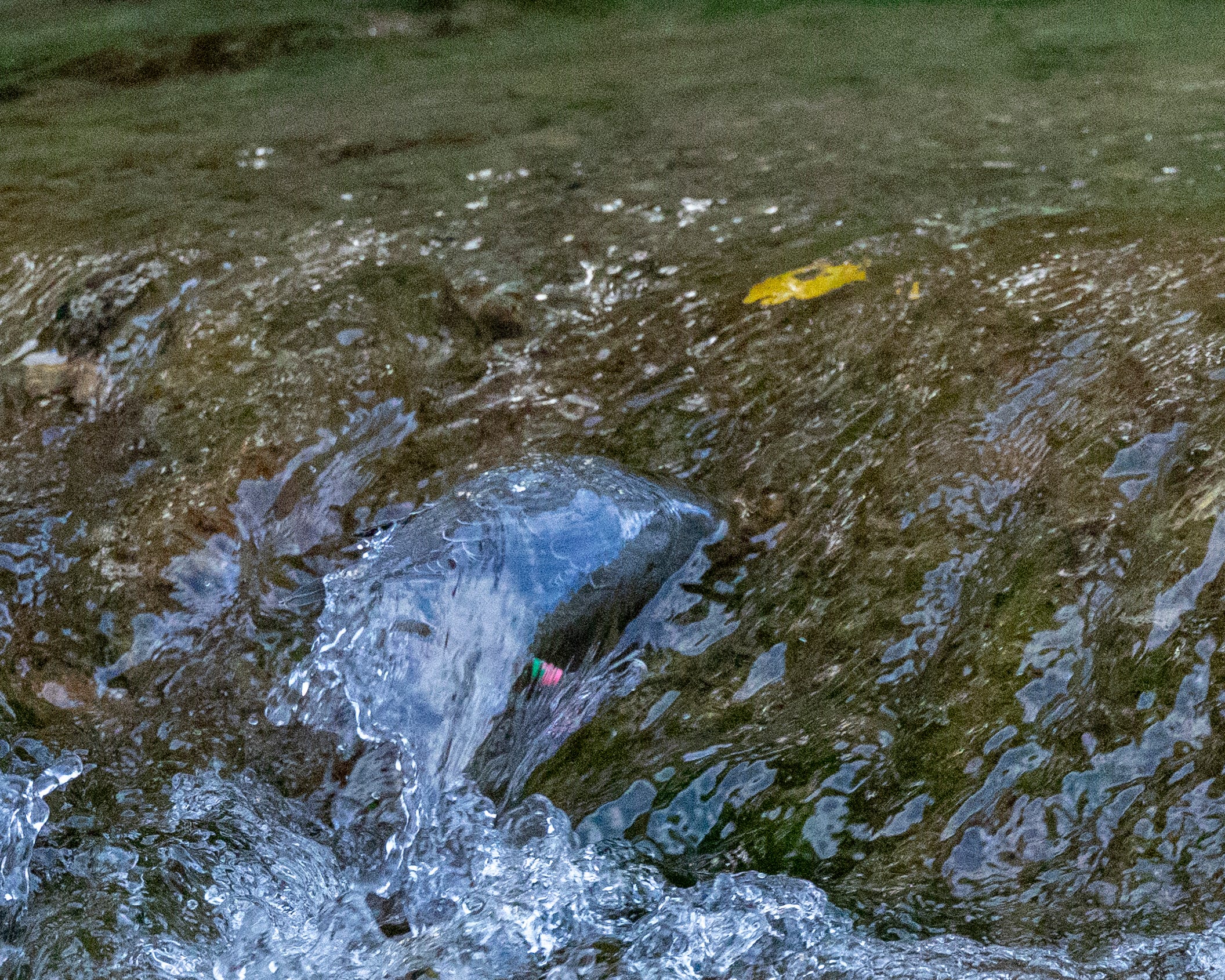
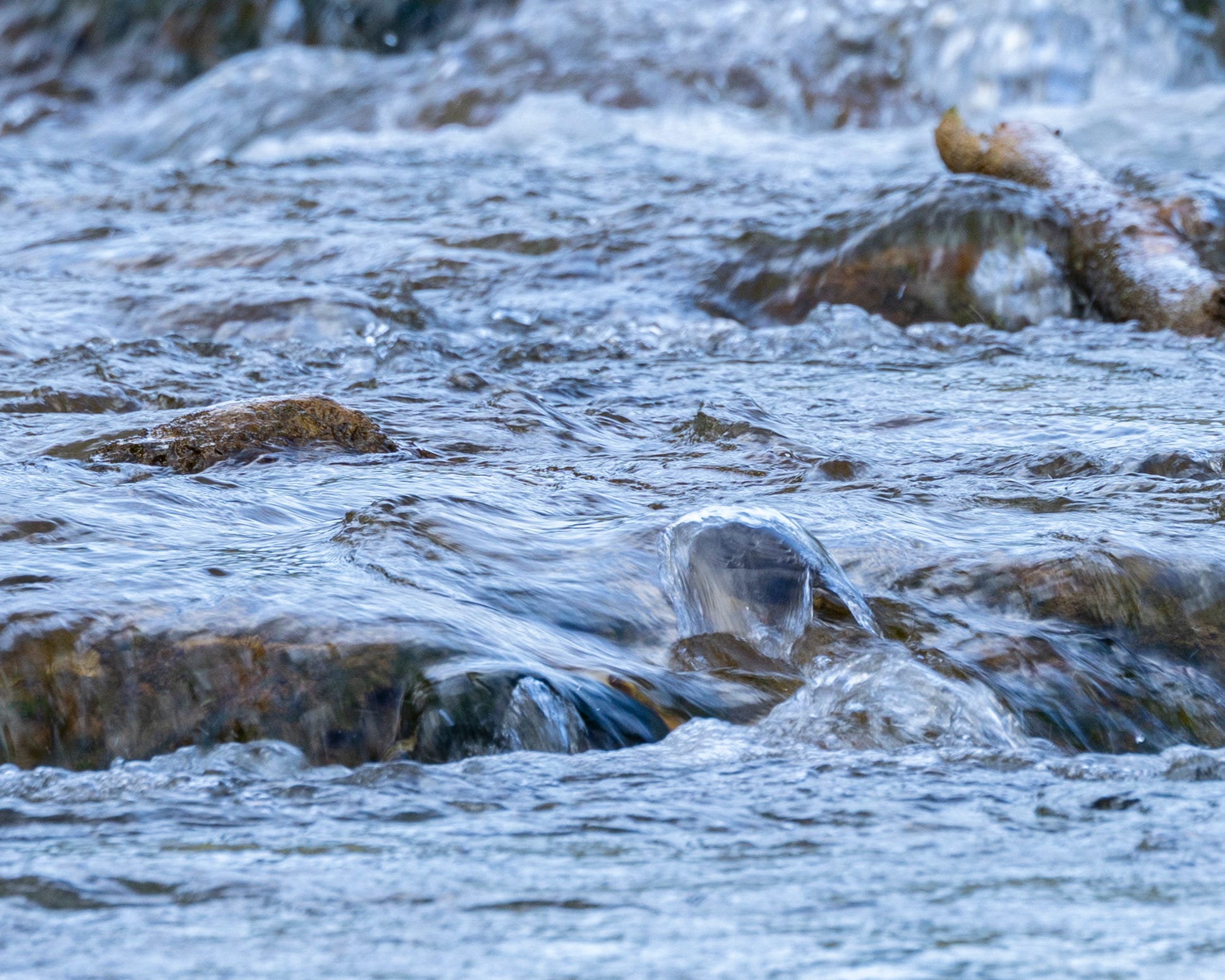
When he covers shallow water in one location, he floats like a tiny duck down to the next riffle. If he comes to a patch of slack water, he tips up and dives to the bottom. While underwater, he faces upstream and flies, angling his short wings to catch the current that holds him against the rocky bottom. His strong feet grasp rocks, and his dense bones and thick plumage help keep him anchored and warm. His blood stores extra oxygen, so he can stay underwater for up to 15 seconds.
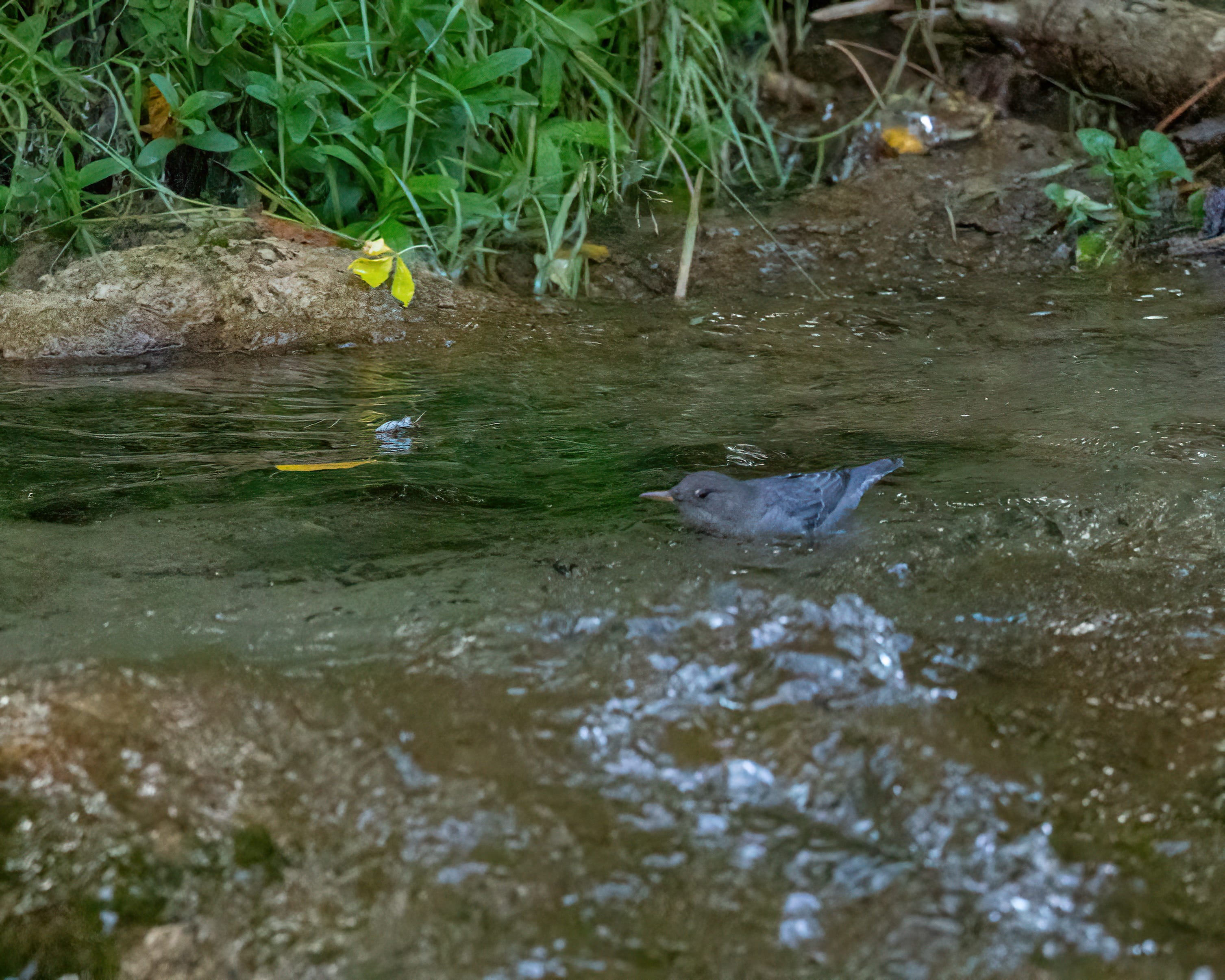
He is 20 yards away now, and I am kneeling in the grass, watching and waiting. Through my binoculars, I can see his outer eyelids flashing white, a short tail, and a stout bill. I also notice that he is banded: silver over blue on the left leg and green over pink on the right. He works his way to the left bank and disappears behind grass. I catch glimpses of him, and my pulse quickens as he struts, bobs, and dips in rhythm with the bouncing water, eyes flashing, body bouncing. He appears at the edge of the grass at 6 yards, and he pauses.
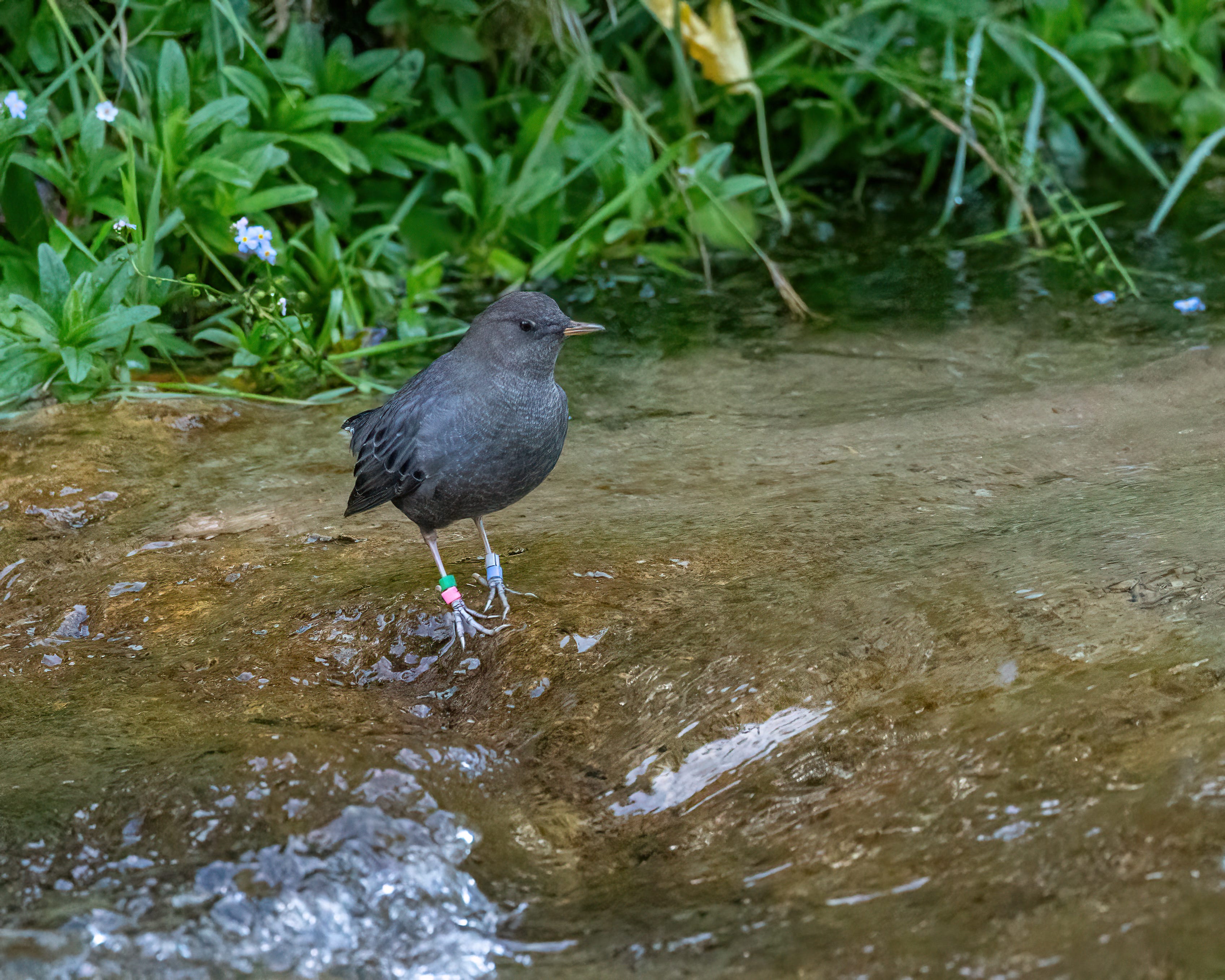
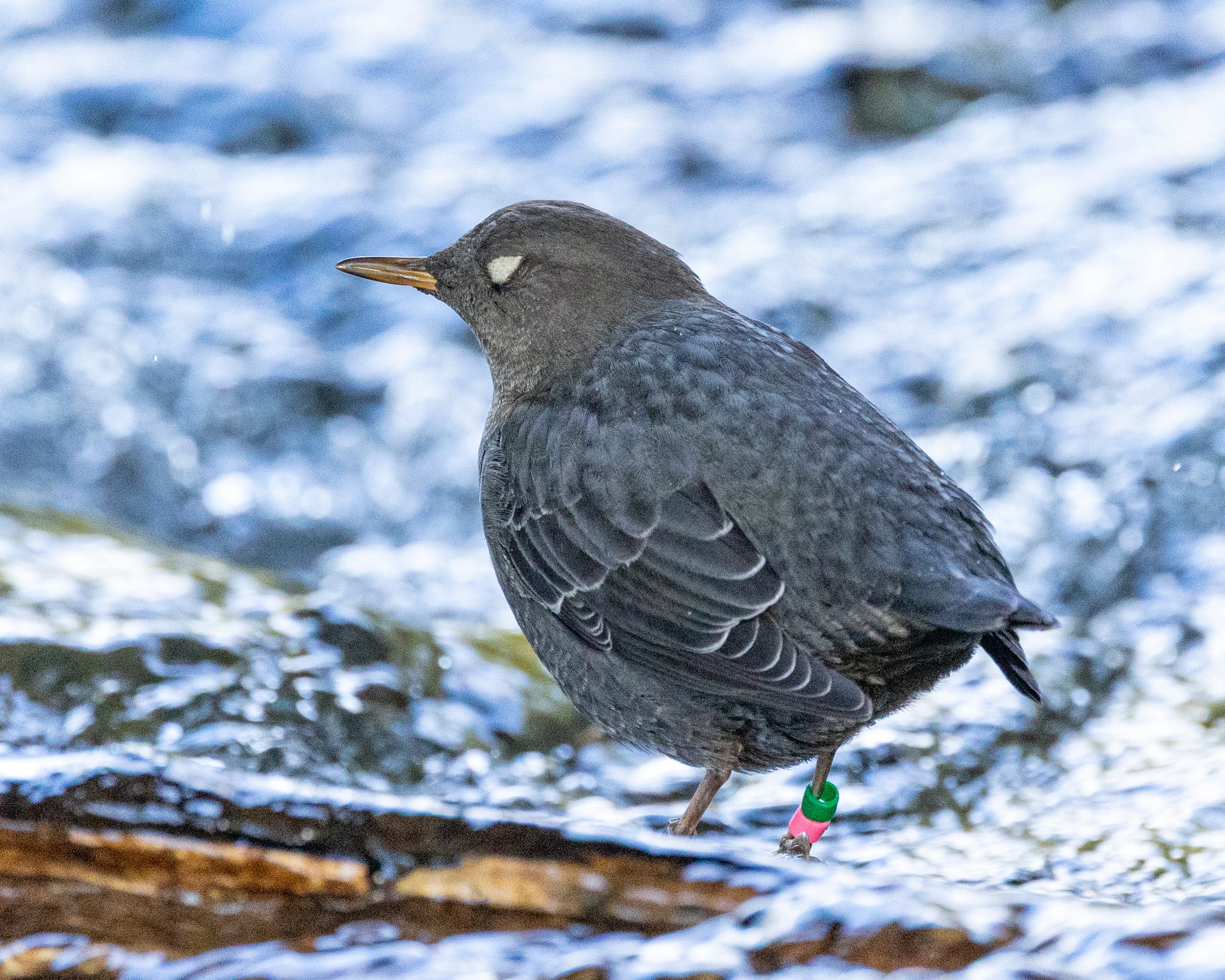
I close my eyes and take a long, slow breath. He steps up to the edge of shadow and sings; then he flies right by me, lands under the bridge ten feet away, and starts singing again. I turn to face him, but he takes no notice of me. He is pouring forth a bright, dancing melody that rises above rushing water. This is his creek, and he knows it.
After five minutes of listening to him sing I slowly turn, stand, and climb the rocks to the bridge, where Mercy is telling a couple about Dippers. The woman is leaning over the bridge railing. When she stands up her eyes are wide with amazement and she is smiling. She thanks Mercy profusely for telling her about the Dipper.
The Dipper is still singing as we head up the trail along Cleopatra Creek. We enter a lush riparian zone where the plants and rocky cliffs close around us. The world becomes quiet, very quiet, and we absorb the South Dakota silence and my steps become light and buoyant.
After six creek crossings, we reach the Devil’s Bathtub. The little creek flows over large flat rocks sheltered by layered rock walls that bulge out over the water. It feels like the land is reaching out and holding us. We sit on the rocks and rest before heading back to the trailhead.
When we arrive at the bridge, two older gentlemen are leaning against the railing. They ask us if we enjoyed our hike. I say, “Yes, that is a beautiful hike.” They smile and nod, and then I tell them that we also saw an American Dipper in the creek. They give me a quizzical look and pause before one of them says, “The birds are in the woods, not the creek. If you stop by the fish hatchery in Spearfish, you can see ducks there.”
I didn’t know what to say. The Dipper was ten feet below them, under the bridge they were leaning on, still working the creek, bobbing on his rock, dropping under, and popping back up into the rushing water. I wondered how many times they’d stood on that bridge without seeing him. But that’s most of us. We’re in too big of a hurry.
Over generations, fast water molded their bones, plumage, and blood. They adapted to the stream. We do it the other way around. We reshape the land to accommodate our restlessness and expect the creeks to adapt to us. The hikers hurrying to the end of the trail, the side-by-sides on the logging roads, the big machines cutting timber. It’s all too much and too fast. We fail to love the Dippers and the land because we don’t slow down long enough to know them.
Standing on the bridge, I thought about our walk up Cleopatra Creek, how the quiet closed in around us, and I imagined patience, empathy, and love seeping into the bones of hikers on this trail, making them feel connected and capable of noticing the patterns and systems that move us and silt into the creek.
Oh little Master, teach me what you know. How to maintain an absolute devotion to clarity. How to read the whole stream and not just its surface. How to find the seams that were made for us, the slipstream where the pressure is reduced, the calm water where we can rest and be fed. The places where we can flow. How to be rooted enough to hold, loose enough to flow, and wise enough to know what the moment calls for.
The world is just a little place, just the red in the sky, before the sun rises, so let us keep fast hold of hands, that when the birds begin, none of us be missing.
Emily Dickinson
Bill, excellent essay on dippers. Thank you! They are special beings in all respects. I lived 35 years in Alaska, enjoying dippers often along mountain streams and most days I looked for them along the salmon stream that flows right through Anchorage. Now, retired in the Pacific Northwest, we see dippers along the glacial river that touches our lives daily. We find at least one of their domed mossy nests almost every spring along or under one of the river bridges or the footbridge of the local walking/biking trail. Precious time spent watching dippers is not deducted from life’s total heartbeats.
I spent an afternoon beside Spearfish Creek. Somewhere in town I enjoyed delicious, fresh-made ice cream from a local stand with a pond out front… a mom was trying to keep up with her group of toddlers. A treasured lifetime memory brought to the surface by today’s letter.
Now I shall have to revisit my miraculous phone’s photo album to refresh the visuals in my mind’s eye.
Thank you for sharing your love and enthusiasm with us Bill. It’s contagious… in the best possible way.
Leones’ Creamery! I found the photos. :)