
Searching for Safe Ground

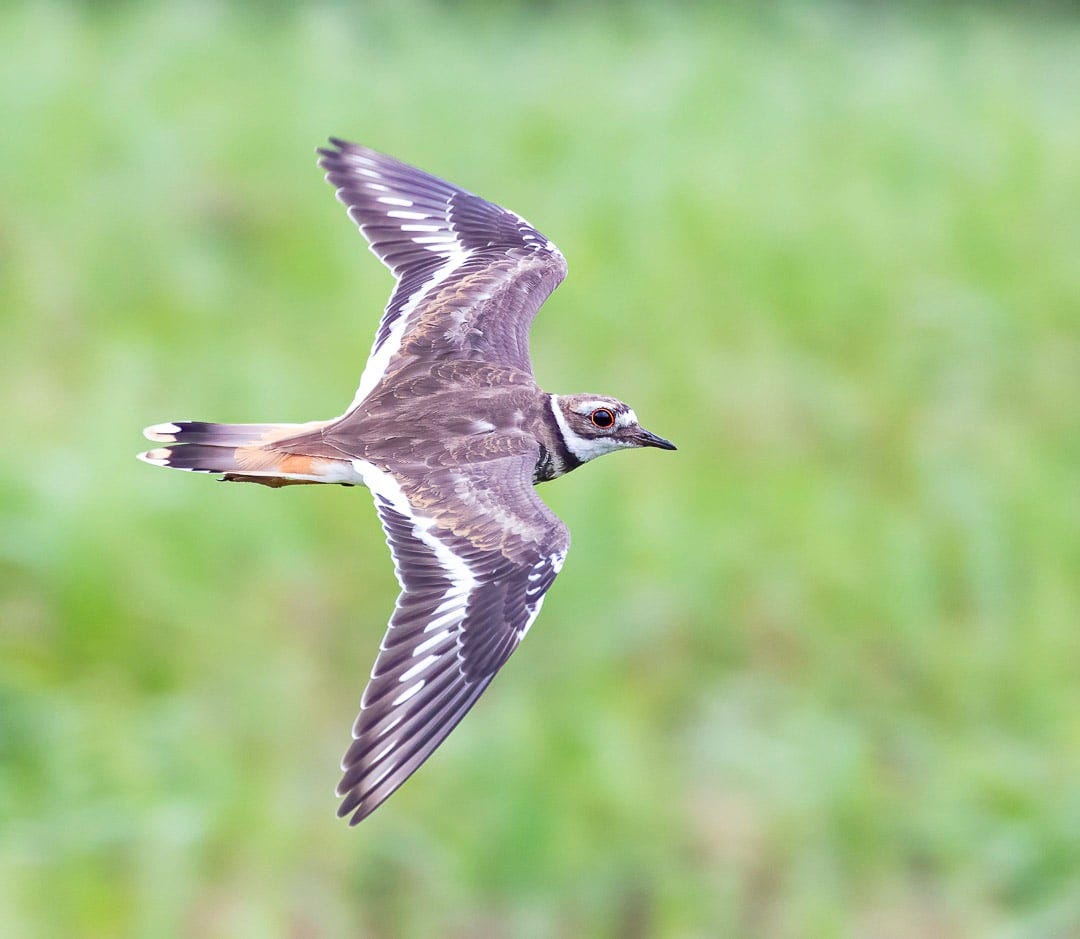
I pull up behind a line of cars and park in a gravel lot by Lake Evergreen, my kayak in tow. I walk back to my kayak, and I’m surprised to see a Killdeer flush from the gravel, feign a broken wing and try to lead me away. There is very little space here. The vehicles and the road on one side, the grass on the other. The grass is mowed short by the parks department. The road is busy. And yet there’s a brash bird calling loudly. How could she possibly nest here?
I resist the urge to walk around looking for the nest. I don’t want to add more activity on top of an already busy parking lot. So I launch my kayak and glide out to a mudflat in the middle of the lake.
I paddle up to it and sit still in my kayak for a few minutes to let the birds get used to me. Then I start to drift, blown by the wind. I pass by the mud, stabilize myself with the paddle, but otherwise remain still, and the birds seem to be at ease. They don’t react to me the way they do when I’m walking.
I come to rest again and watch the Killdeer busy foraging. She dips down and picks at the moist soil every few seconds, grabbing tiny insects. It would be like us grabbing a single sesame seed and eating it. They occasionally find a worm or a larger insect, but a lot of their time is spent picking tiny insects off the sand. And then there is time spent calling, chasing, flying fast looping flights over open water and back to rest on the sandbar.
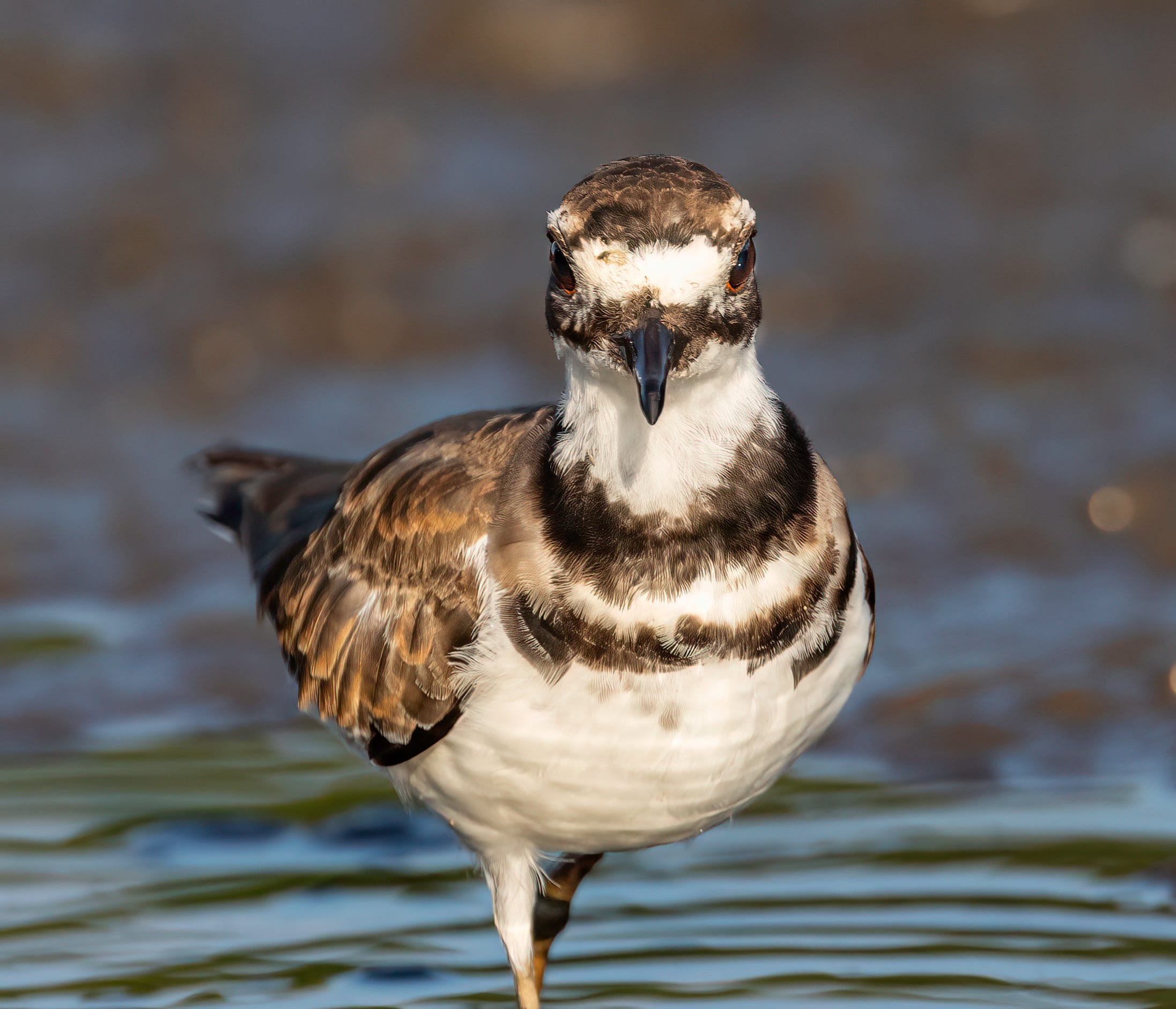
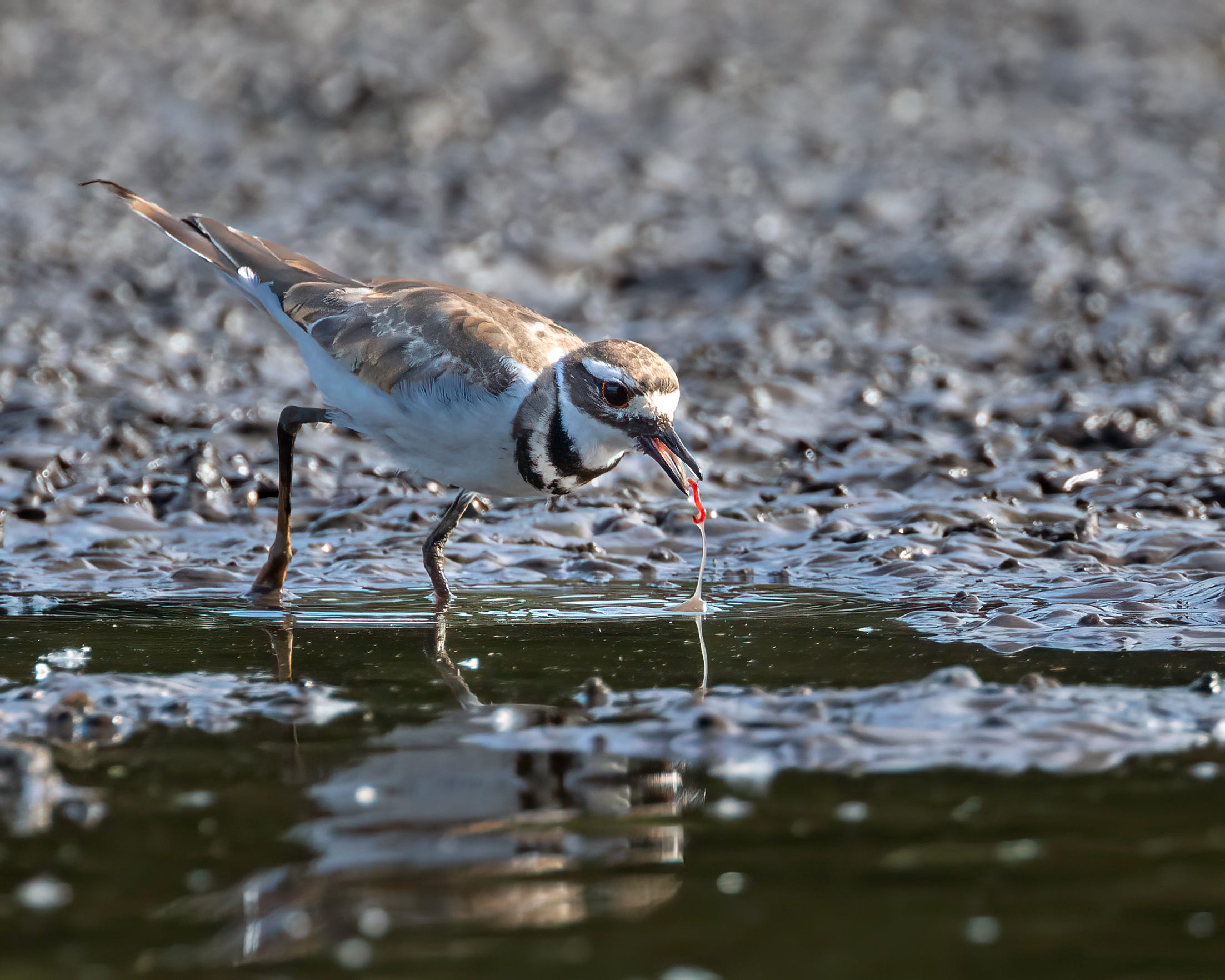
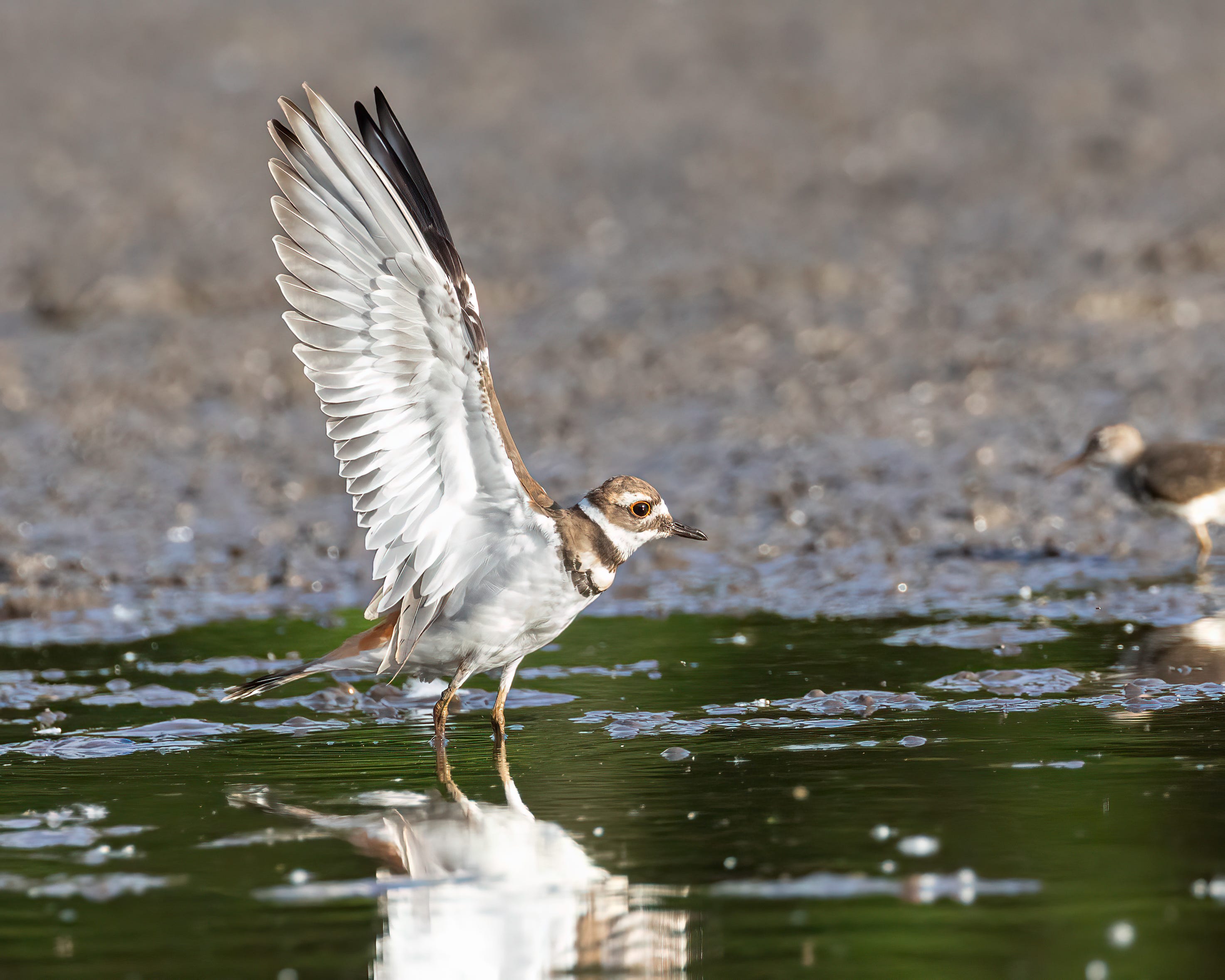
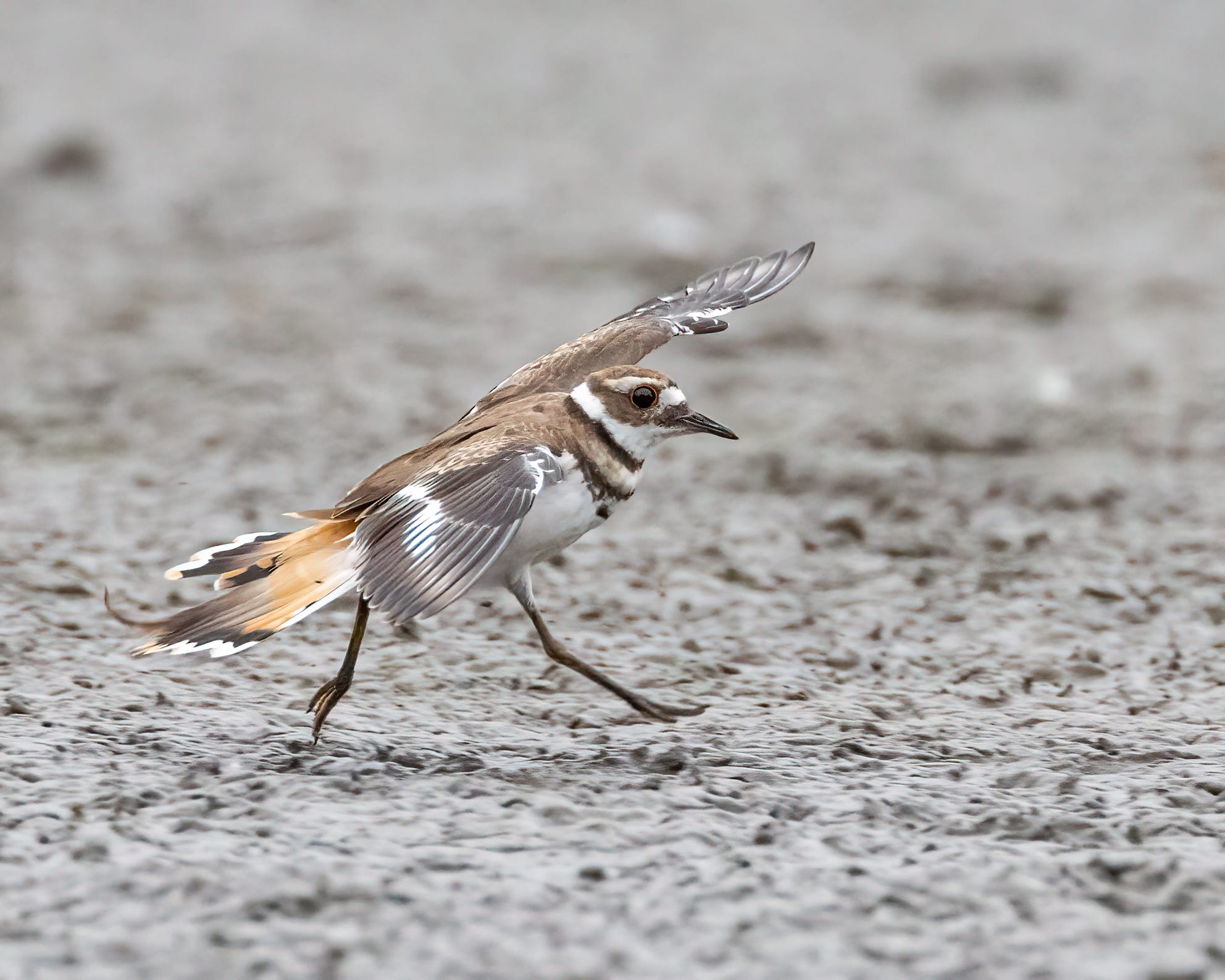
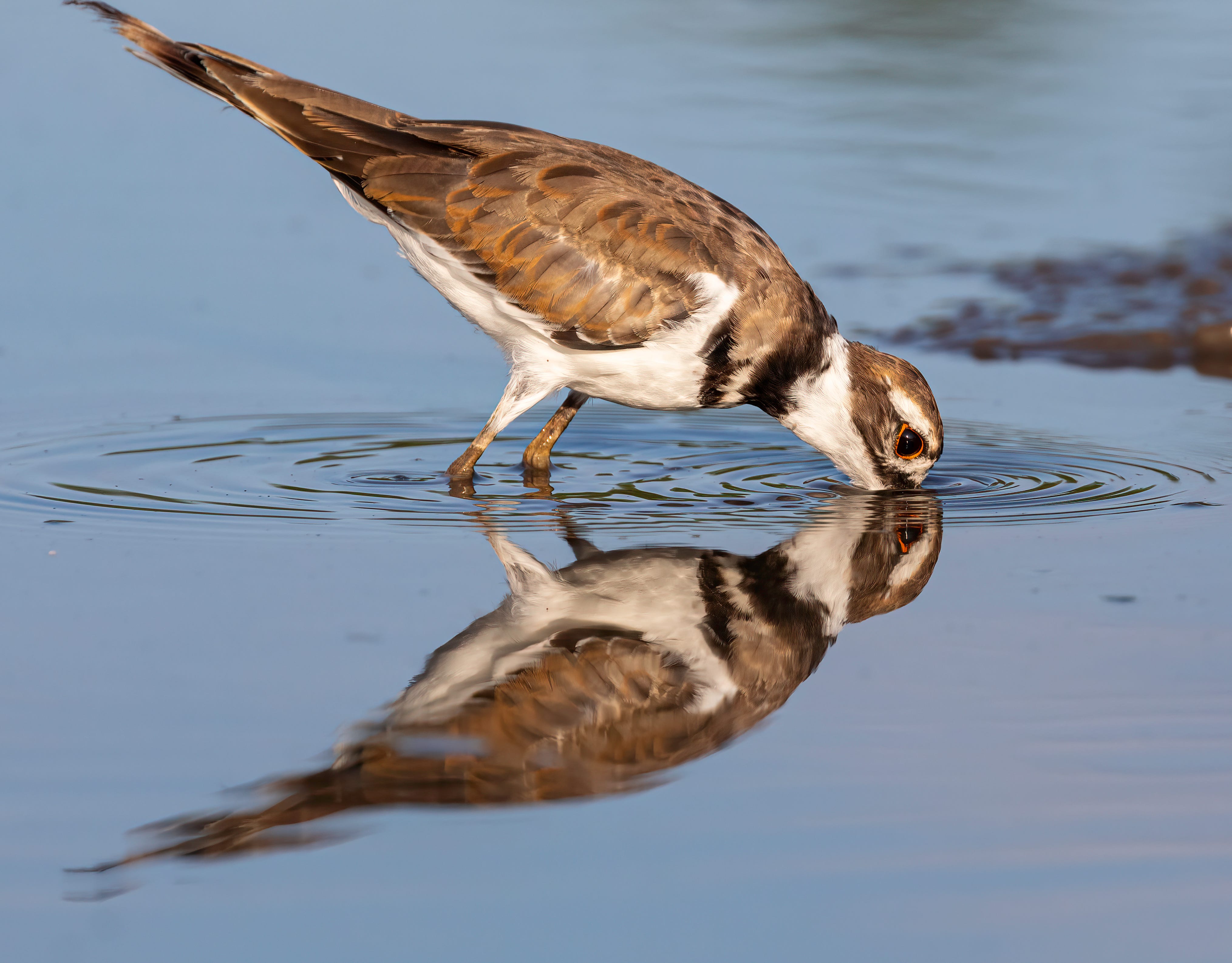
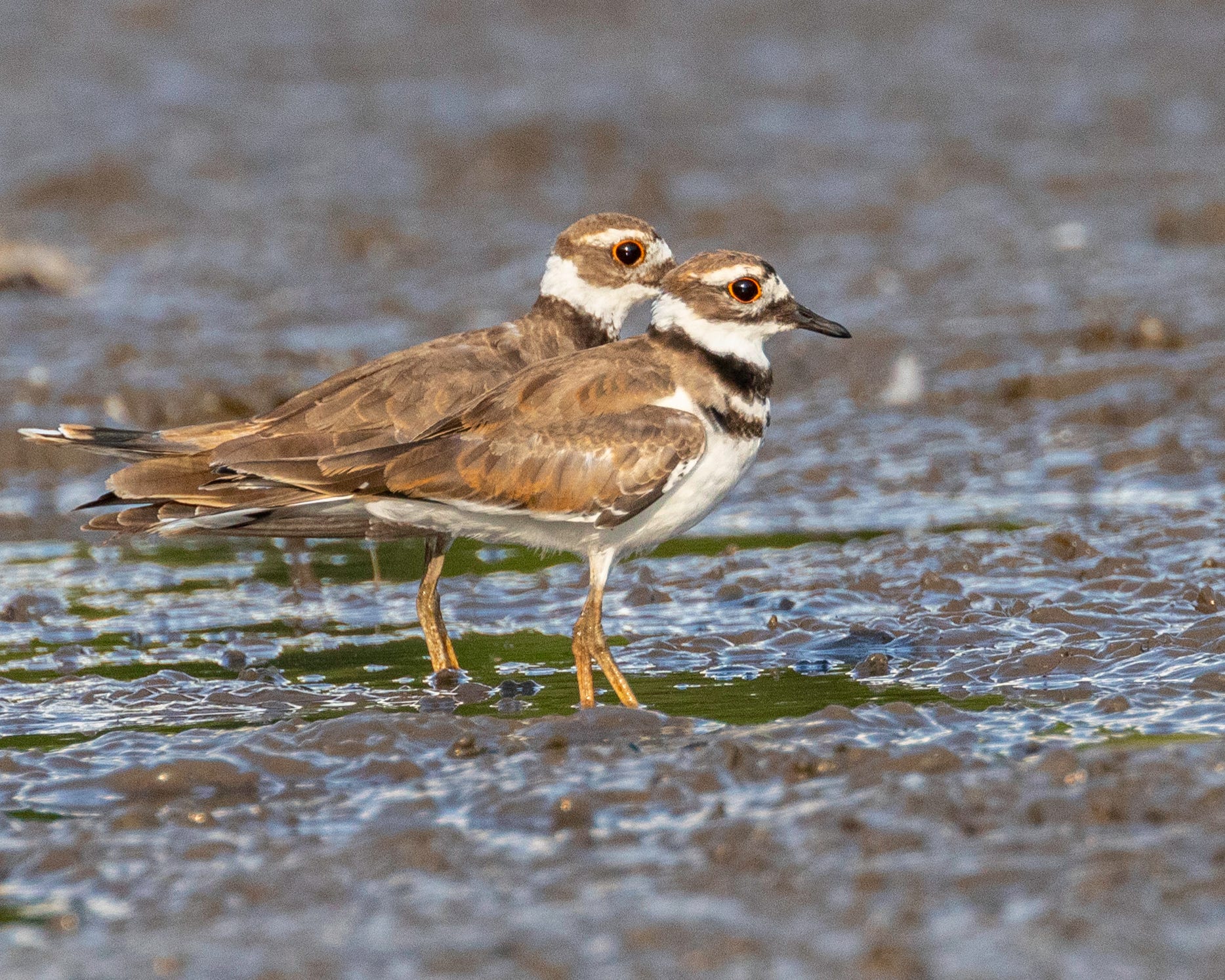
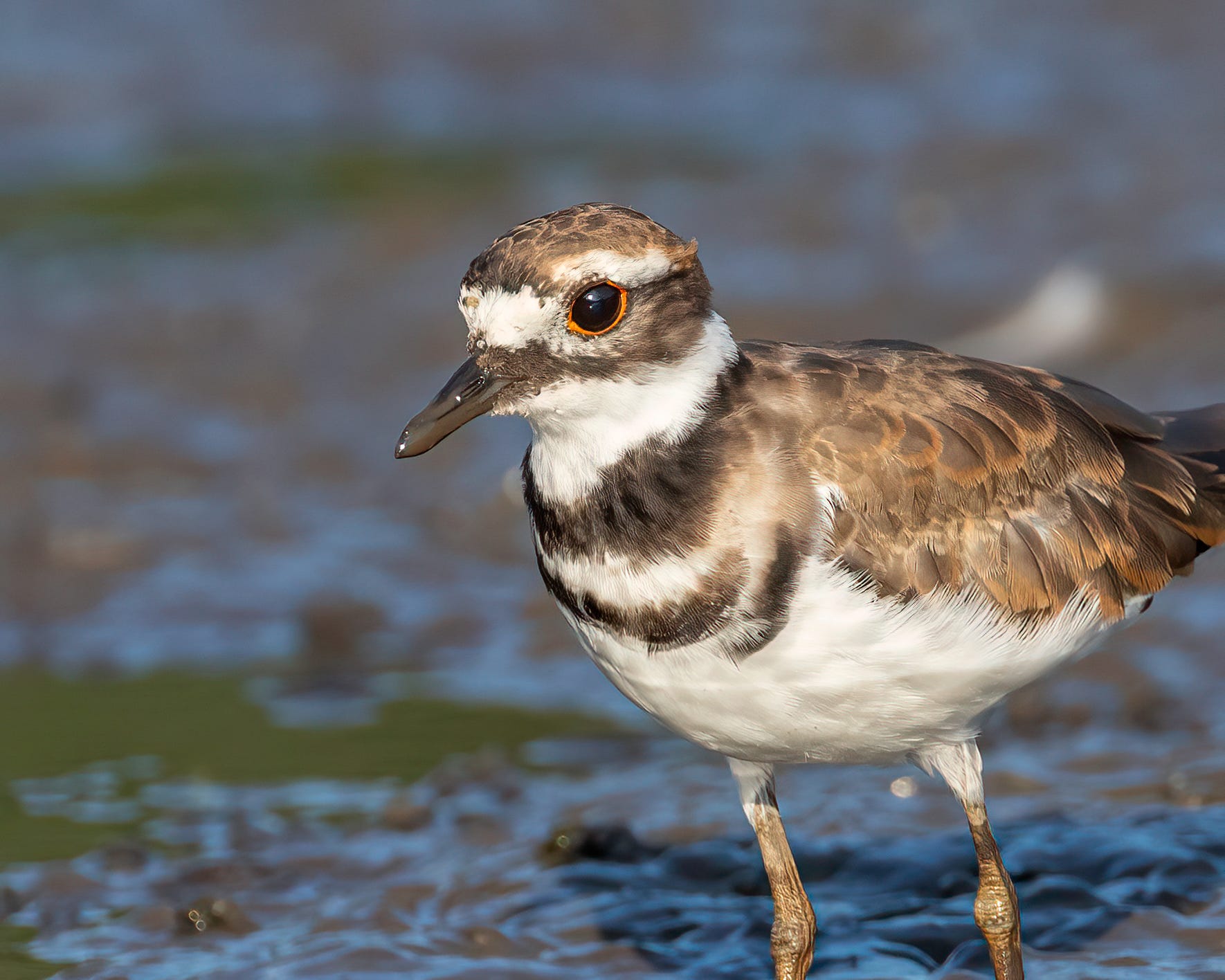
The Killdeer on a mudflat looks like other shorebirds. But when she takes flight, circles over the lake, and settles back down onto a gravel parking lot, she becomes something different. She is choosing to nest among us.
More curious than ever, I decide to follow her. I paddle back to the parking lot, pull my kayak up the slope, and stand beside my trailer. There she is, standing in the gravel, looking at me. She bobs her head, chatters, darts away, pauses, and looks back. It is clear that she has a nest nearby. I work on loading my kayak while continuing to watch her.
I keep wondering how a nest in this area could produce young Killdeer. They used to choose gravel bars along rivers and other exposed areas of land in an intact landscape. These gravel bars were bordered by moist soil that was full of life. This is where the tiny chicks learned to feed themselves. Now this road is a proxy for a river, and this parking lot is a proxy for a gravel bar. The Killdeer doesn’t know the difference. So here they are, trying to adapt to an asphalt river.
I look out across the parking lot and realize just how threatening it is. There are tire tracks everywhere. The recently mown grass is two inches high. There are crows calling off in the distance. A Red-tailed Hawk is perched on a nearby wire. A Cooper’s Hawk is calling in the woods. There are cat and dog tracks in the mud. The cats, dogs, Raccoons, and Crows are more abundant because of us. We feed them, and their numbers grow. That there are any Killdeer at all is remarkable.
How do they thread that needle? I’m not sure, but I know the chicks can run shortly after hatching, and remarkably, they can feed themselves. They spend thirty days flightless and at risk in the short grass. Both parents incubate. Both do threat displays. They will renest if their first nest is destroyed. And despite all of these adaptations, most nests fail. Roughly a quarter succeed. These are the strategies that keep the chattering plover in our midst.
Of all the threats a Killdeer faces, mowing is the one we choose and the one we have the most control over. Some mowing is required, to maintain sightlines and a certain order. But we tend to take this too far. Mowing a narrow strip along the road is one thing. Almost invariably, though, the mower continues. Into the ditch. Up the next slope. Into the field. The whole area cut short, and most of the life that was trying to survive there is gone.
The strips we leave would fill the countryside with song. It costs us almost nothing. Just a little restraint. The reward is more chattering Plovers, Meadowlarks, and Butterflies, making a life in our midst.
We decide whether this ground invites life or cuts it short. The Killdeer is searching for safe ground, just like us.
I love watching Kildeer. I have seen them with very tiny young ones, but if they all sit down on a gravel road they just blend in.
One of my most profound moments is when a mom Kildeer had a baby fall into a grated area about 2 feet deep. She was in a panic, and it seemed like she was asking for help. I went to the grate and looked in and sure enough, the young one could hear it's mom calling and was also trying to figure out how to get out. It was still flightless, so it had very limited options. The bars of the grate were about 3 inches apart. I tried to see if I could pry them off, but no. I had to get creative. I ripped a narrow strip off a beach towel I had, folded it in half and dropped the looped end down to the baby. After a lot of coaxing, I finally got it in the loop. It seemed to realize this was the only way out and relaxed in the looped cloth. I SLOWLY raised it through the bars and brought it out to solid ground lowered both ends of the towel, and the baby ran to the mom. Mom excitedly ran circles around the baby, inspecting it to make sure it was OK. Then they both ran off together chattering back and forth. It was so cool to see them reunited!
Thank you for reminding others of not mowing too far.
In Denmark there is a trend called ‘Vild med vilje’, sth. like ‘wild by intention’. Could you initiate such a movement in your area?