
The Kettle

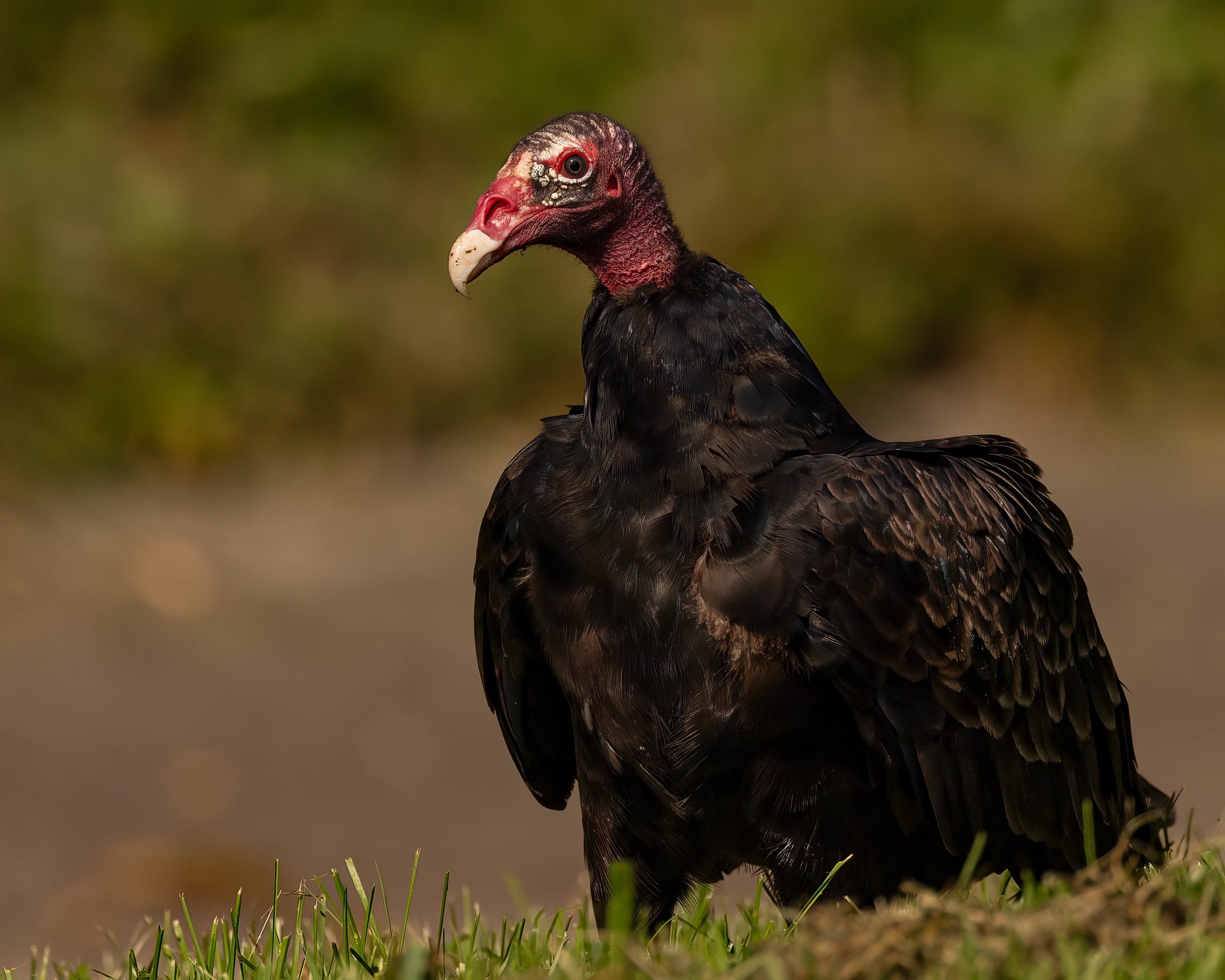
Even a wild boar
with all other things
blew in this storm.
— Matsuo Bashō
By noon it was eighty degrees. I ran my usual loop through the neighborhood under a generous sun, the sky that particular blue that makes you forget winter ever existed. By mid-afternoon I was in the garden turning soil, pleasantly tired, not thinking about much of anything beyond planting seeds.
Then the first gust came in from the west. The temperature dropped thirty degrees over the next hour.
Old Sam Peabody Peabody Peabody. The white-throated sparrows were back, working the leaf litter under the feeder, having arrived on the same cold front now bending the trees. The ones with voices were announcing what the silent ones would soon confirm
I looked west and saw the vultures.
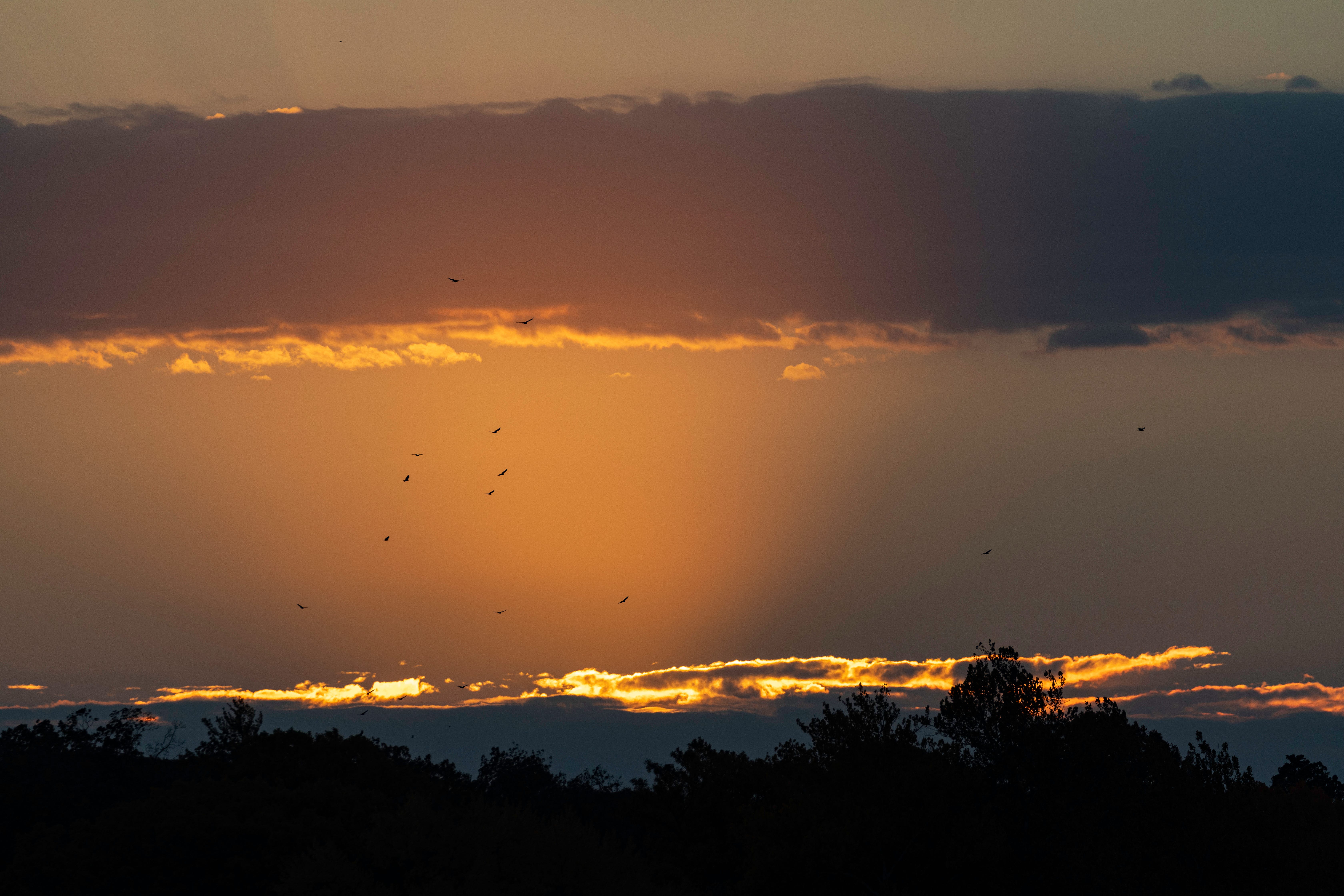
They were distant at first, just dark flecks against the gray. But they multiplied. One became five, five became twenty, and then there were forty turkey vultures over my neighborhood. They built up the way the storm itself had built: shape-shifting, circling, swirling, rising and falling, genuinely buffeted by the wind but somehow, impossibly, at ease in it. They were a sky poem.
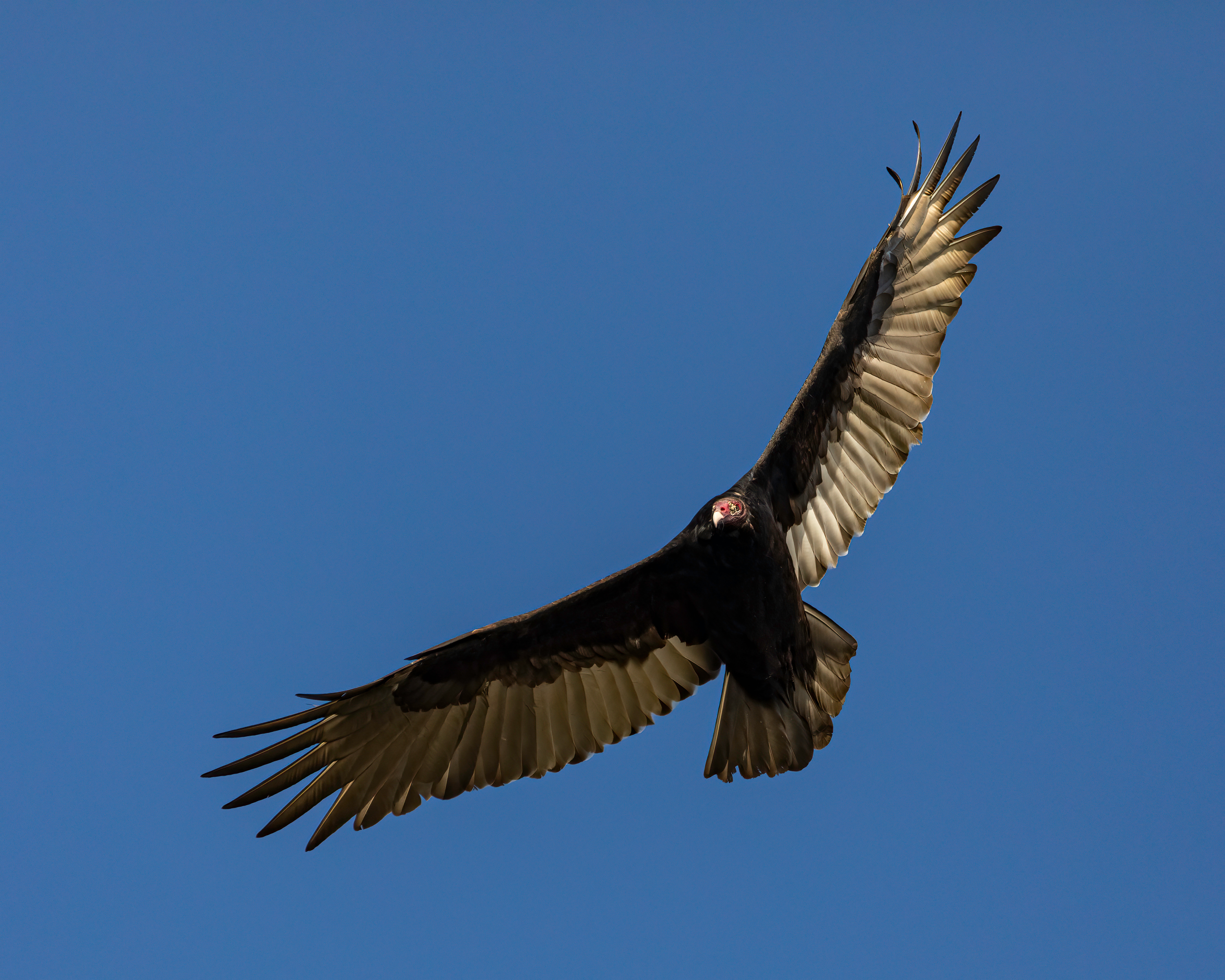
Turkey vultures carry the weight of our projections. On the ground they are ungainly and hunched, their bald red heads tucked into dark shoulders like old men in overcoats. They hop. They lurch. Up close, they smell like what they eat. We have made them into symbols of dread. And yet I have come to think that this is exactly where they teach us something — that the courage to look past the surface of an ugly thing, to stay present with it long enough to see what it actually is, may be one of the more important skills available to us right now. Look into the eye of a turkey vulture at close range and you will find someone looking back, patient and ancient and entirely unconcerned with your opinion of its face.
Cathartes aura. The purifier. Not the devourer, not the harbinger, but the one who cleanses. They arrive in the wake of death and leave the world measurably better than they found it. When vulture populations collapsed in India in the 1990s, human mortality rose sharply in the affected districts as waterborne disease spread through decaying carcasses. Half a million additional deaths, by some estimates, before anyone understood the connection. We rarely appreciate what they do until they are gone.
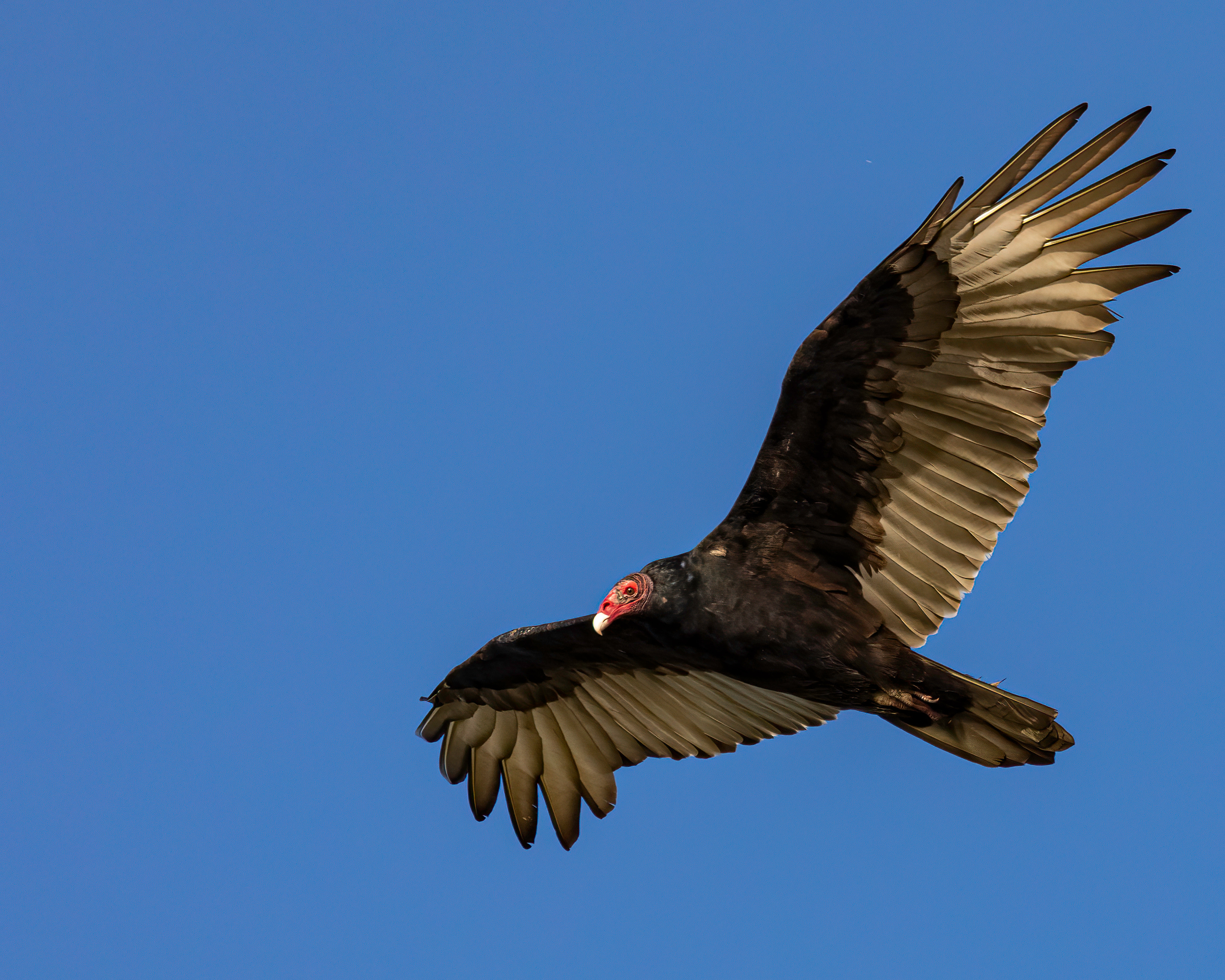
When they open their wings, they span six feet. There is the slow tilt into the wind, the silver flash of flight feathers catching the gray light, and suddenly they are one of the most graceful things in the sky. More graceful, I would argue, than the falcon’s stoop or the hawk’s clean arc, because their grace costs almost nothing. It is not power or speed. It is pure responsiveness and trust in the air that holds them. The Wright brothers knew this. When designing the first airplane, they studied the turkey vulture’s ability to adjust individual feathers to control the flow of wind across the wing. We learned to fly by watching these birds surrender to the air.
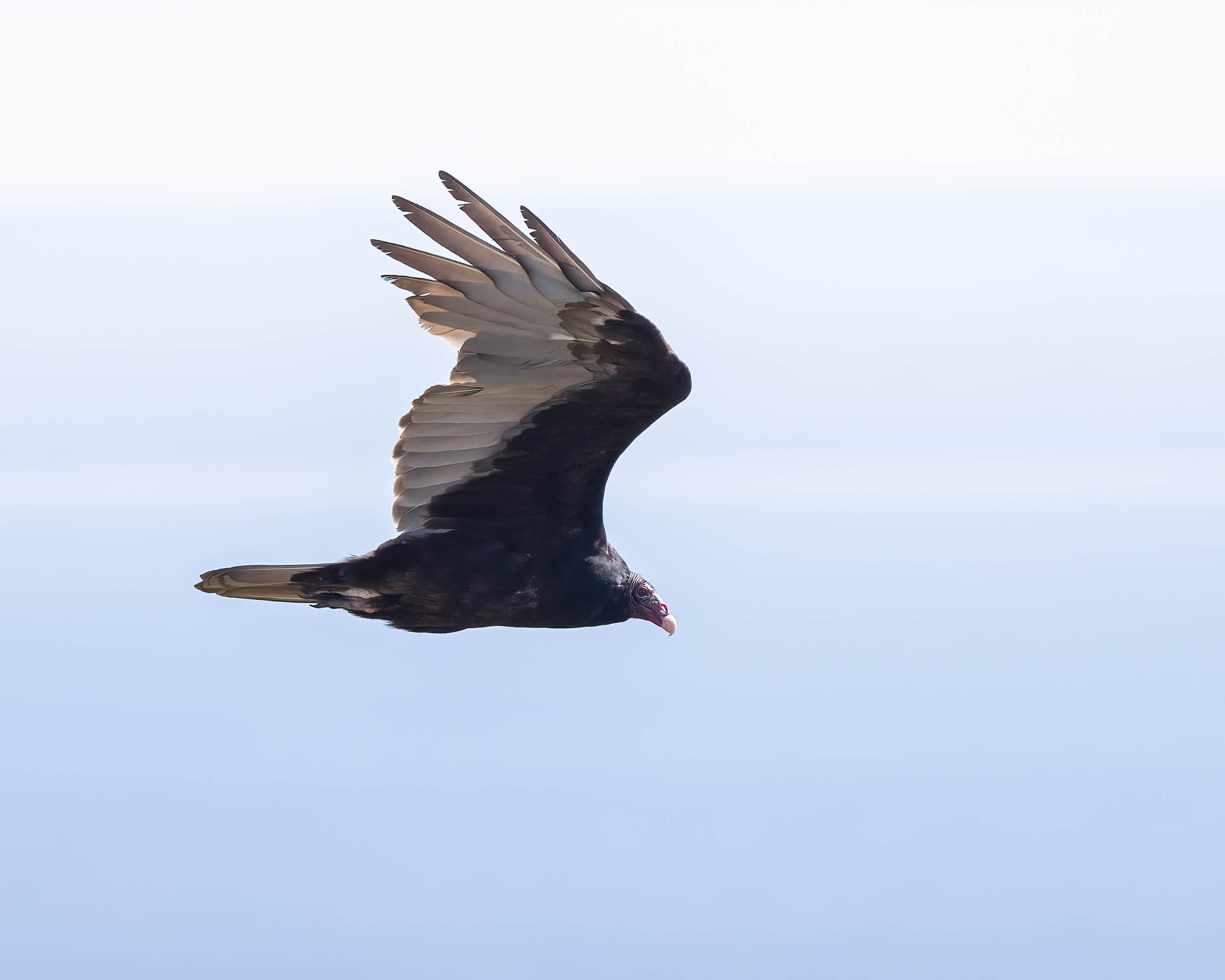
There is real engineering behind the effortlessness. Turkey vultures have low wing-loading, a high ratio of wing area to body weight, which means the air genuinely does the work. Their pectoral muscles are built in two layers: a fast-twitch outer portion for the rare occasions they need to flap, and a fatigue-resistant slow-twitch inner layer designed specifically for the sustained business of stabilizing wings during soaring. A soaring vulture uses barely more energy than one standing still on the ground.
I had always assumed they needed thermals, those rising columns of sun-warmed air that carry hawks high on still clear days. But the storm over my yard wasn’t generating thermals. It was generating something called wind waves, the lift that forms when moving air strikes a raised surface and deflects upward. A rooftop. A treeline. The side of a garage. The ordinary geometry of a suburban neighborhood produces an invisible lift. I had lived amidst this lift for years without once thinking about it, the rooftops, the treelines, the people on the other side of every wall, all of it generating upward momentum that I was too busy to feel.
I watched them drop low over the rooftops, catch an updraft off a neighbor’s chimney, and shoot upward, banking hard, rejoining the swirl. Forty birds working the same churning air, each one making constant tiny adjustments. What I had always taken for wobbling was actually the most sophisticated kind of sensing imaginable.
The feathers themselves have no nerves, but nestled at the base of every flight feather is something called a filoplume, a hair-thin bristle whose follicle is packed with mechanoreceptors wired directly to the central nervous system. When airflow moves across the wing and a feather shifts even slightly, the filoplume fires. The faster the wind, the faster the signal. The bird does not think its way through the storm. Its body already knows how to move.
The Narrow Road to the Deep North, Matsuo Bashō wrote of the cloud-moving wind that filled him with a strong desire to wander. He walked north into the unknown in 1689, pulled by something he couldn’t quite name, and the journey became one of the most beautiful books in any language. He was, I think, a turkey vulture in sandals. He followed the energy.
This is the harder thing the vultures know. They follow the lift rather than a rigid plan. When the wind is good, they fly true, and when it isn’t, they deviate, letting the landscape suggest the route. North is a general intention. The journey a negotiation, a letting go.
I recognized something in this I have been learning slowly, at considerable cost, over many years. The older I get, the less I trust the itinerary and the more I trust the wind. The ambitions of my thirties, the straight lines I tried to hold against every crosswind, have given way to something looser and I think truer. For years I lived in too small a container, flapping away to hold a heading someone else had set for me. I did not know I was squeezed until I started, slowly and with help, to unfurl.
To open.
Following the energy requires a willingness to not know. It is intuition, the knowing before knowing. It is getting quiet enough inside to feel what is rising before you understand where it’s going.
With every gust of wind
the butterfly changes its place
on the willow.
— Matsuo Bashō
There is a wisdom that can only be observed. Trees sway in the wind, rooted, rigid, and flexible. The vulture also does not fight the wind. It enters into a relationship with the wind and lets that relationship carry it somewhere.
We generate lift for each other the same way the neighborhood generates it for the birds, without knowing we are doing it. A word at the right moment, a pat on the back, a subtle squeeze of a shoulder. Someone who stays in the turbulence with you rather than drifting toward calmer air. This is our version of a kettle. I think of my men’s group and the way we navigate difficult terrain, how we circle closer without quite deciding to, each individual’s steadiness supporting the group.
What if life could be easy? Not without difficulty, the storm is real and the wind is real, but underneath it all, at ease. The vulture doesn’t earn its flight through struggle or force of will. It simply opens into what is already there. The lift reaching out to anyone willing to trust it.
Close your eyes for a moment, if you are willing, and join me in imagining you are a turkey vulture. Feel whatever air is moving around you right now and imagine it has weight, texture, direction, and that your body already knows how to read all three, the way your hand knows the difference between silk and sand without being told. Imagine six feet of wing, not feathers exactly but an extension of your own sensing, tilted just so into the current. Feel the lift arrive not as something you have earned but as something being offered. The wobble is there. The uncertainty is there. You are not fully in control, but you are not lost either. You are in conversation with something generous, and it is carrying you north, and it is enough.
If I had wings, I know what kind I would want. Not the falcon’s directed force, but the vulture’s, built for surrender. The kind that reads the wind. The kind that finds lift in ordinary rooftops and makes a thousand miles of it, tilting and wobbling and adjusting, never quite where it planned to be, and going exactly where it needs to go.
Above my yard, the kettle slowly dissolved. One bird peeled off north, then another, each riding the front until the sky was empty and ordinary again. I stood in the yard a long time after they were gone, feeling the wind on my face, my spirits lift and my shoulders drop from what they had been holding all day.
Spring is here now, the vultures are moving north. I want to go with them in my own way, not by flying but by wandering. To kneel in the grass and press my nose into the first wildflowers, inhale and soften. To allow the ephemeral to do what it has always done when I let it, which is to infuse this passing moment with the particular weight of being alive right now. The vultures don’t mourn the thermal when it ends. They glide toward the next rising thing, already reading the air, already open to what comes.
That is the whole practice. That is what spring is for.
—
Under the same sky —
vulture and I, neighbors,
spring wind between us
That bald red head bowed —
then the color of eternity
unfolds
Spring wind lifts them north —
even the shape of our fear
soars like surrender
Beautiful, Bill! I love where you went with this. In a sense, you described what sailing feels like. Partnership and surrender — especially in a storm. Talia Lakshmi Kolluri has a story from a vulture’s POV in her wonderful collection. (Each story is from another being’s POV). It opens with the narrator relating that an eagle once called her ugly and flew off. “‘I am not ugly,’ I said to the wind that remained, ‘because I will be of use.’” The story is “Someone Must Watch Over the Dead.”
The local turkey vultures have a fan club on my farm. Every time we see a kettle above our field, we stop and admire them. They roost every night in a large sycamore in the cemetery just a half-mile away, and once in awhile in another sycamore in a neighbors yard. We learned that a group of roosting vultures is called a "committee".