
The Talking Tree

Graceful trees line the shallow riffling water of Sugar Creek — Black Walnut, Cottonwood, Mulberry. Each one speaks to me in hushed tones. Each one draws me into deep time. My heart and thoughts slow down in their presence as I traverse the well worn path, listening to the water, and watching the light mingle with leaves. Their dark limbs and bright new leaves are becoming canopy. The cottonwoods are fluttering above me, doing what cottonwood leaves do in any breath of wind, making their soft running speech.
Then the canopy opens, and the vista is wrong. A long horizontal line cuts across open ground. My eye follows it, and at the far end I find the root plate sticking up against the sky, a torn disc of earth six feet across, pale wood at the break still bright and wet against the dark soil. My chest tightens.
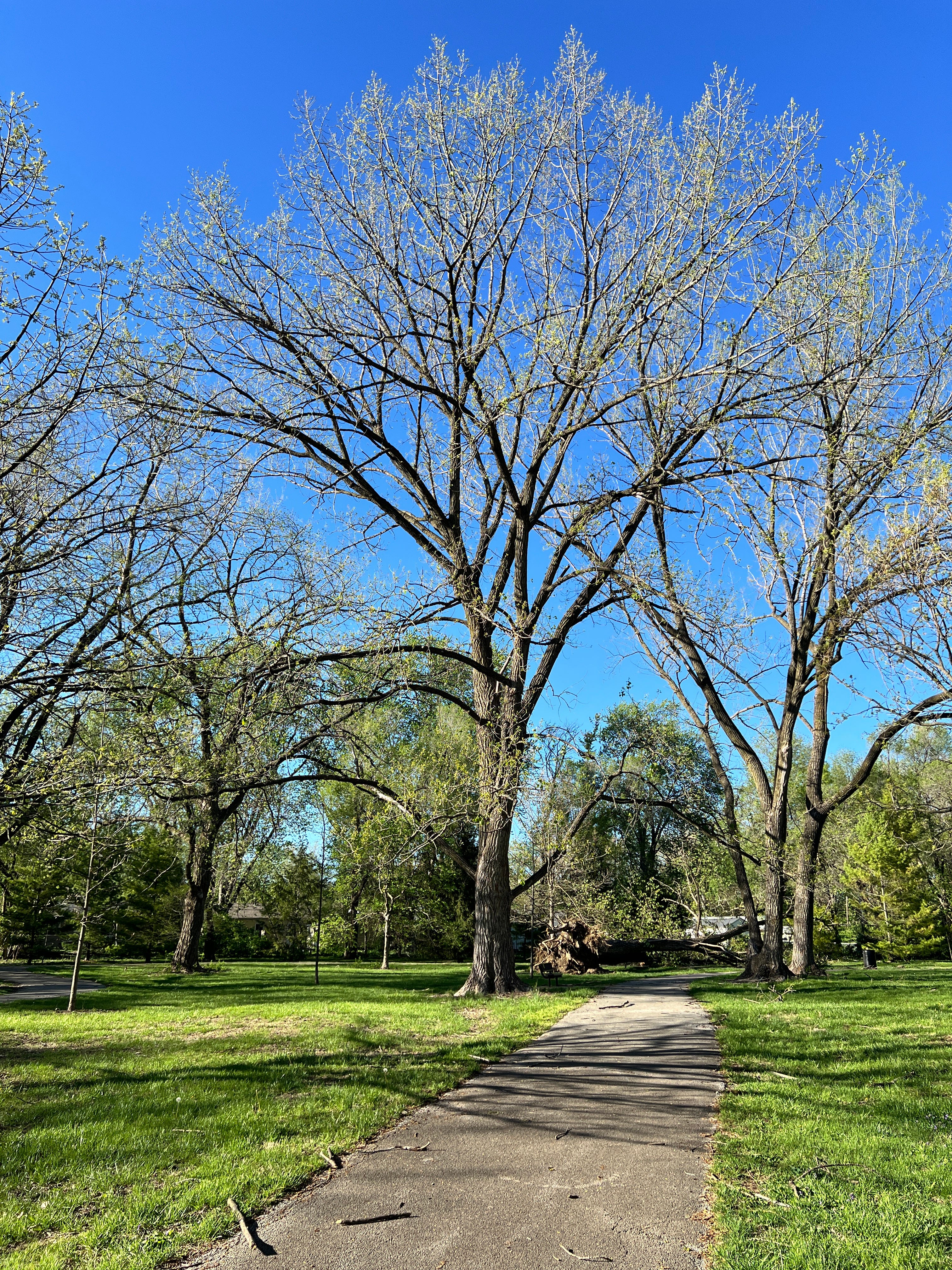
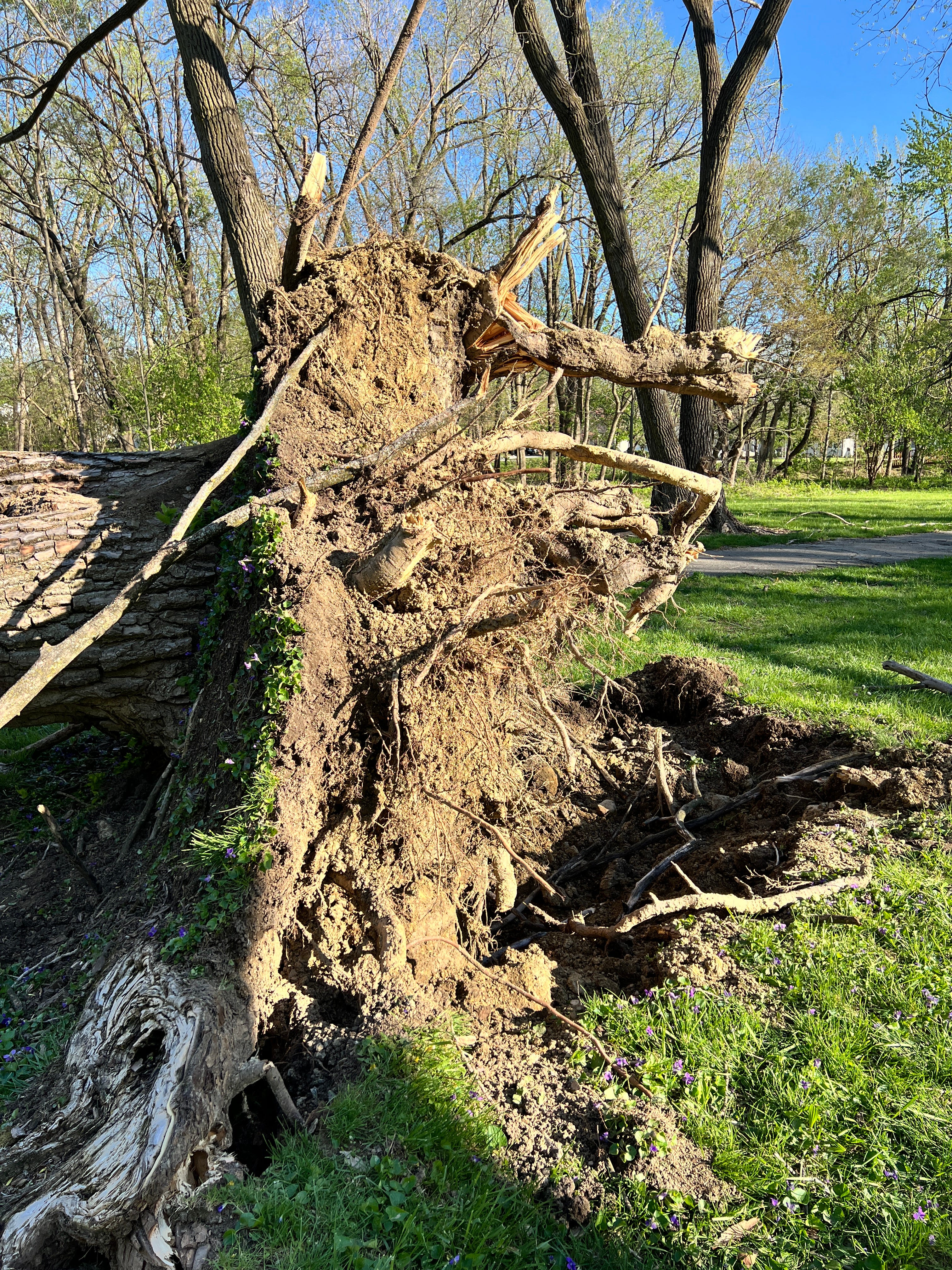
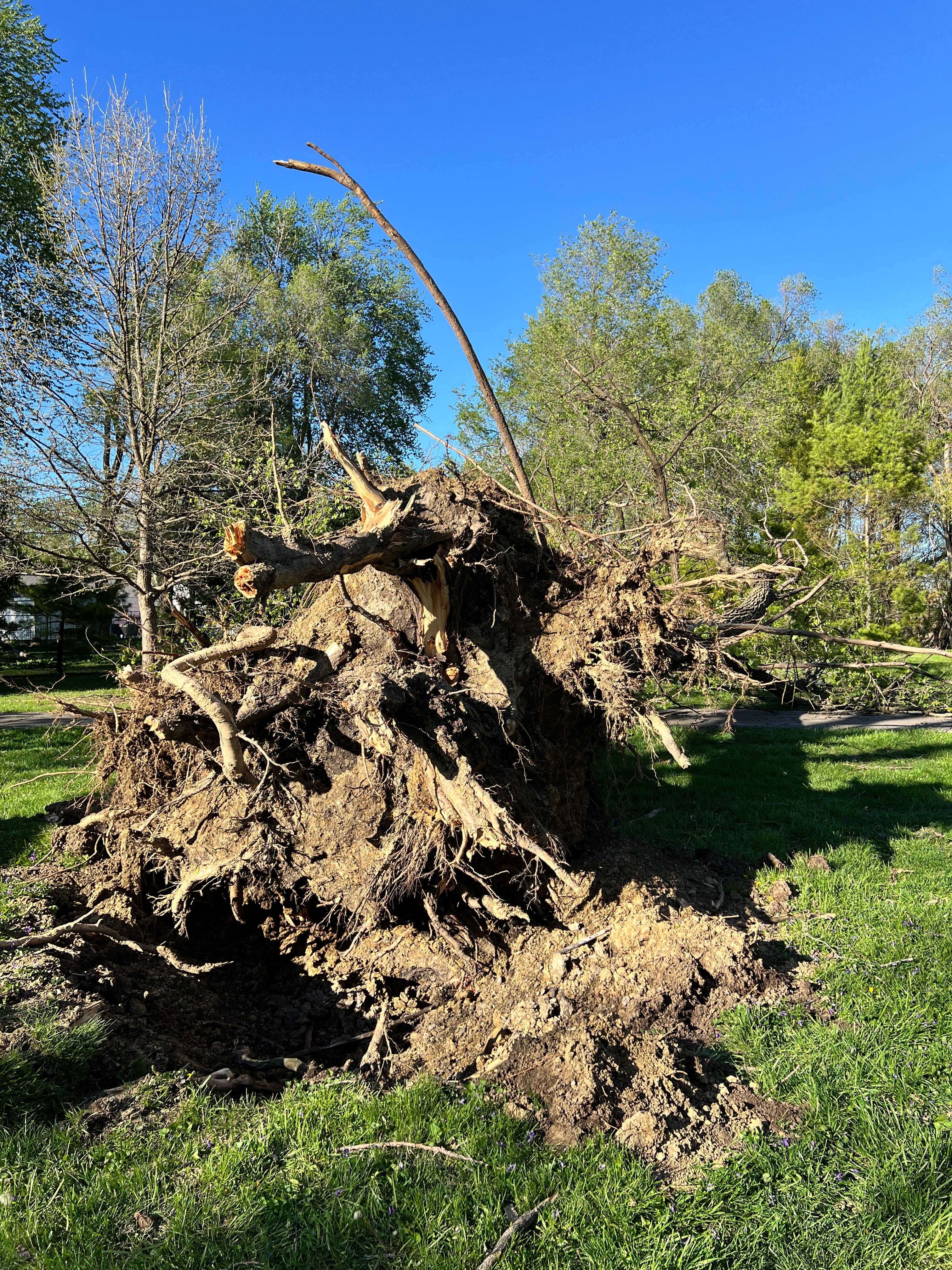
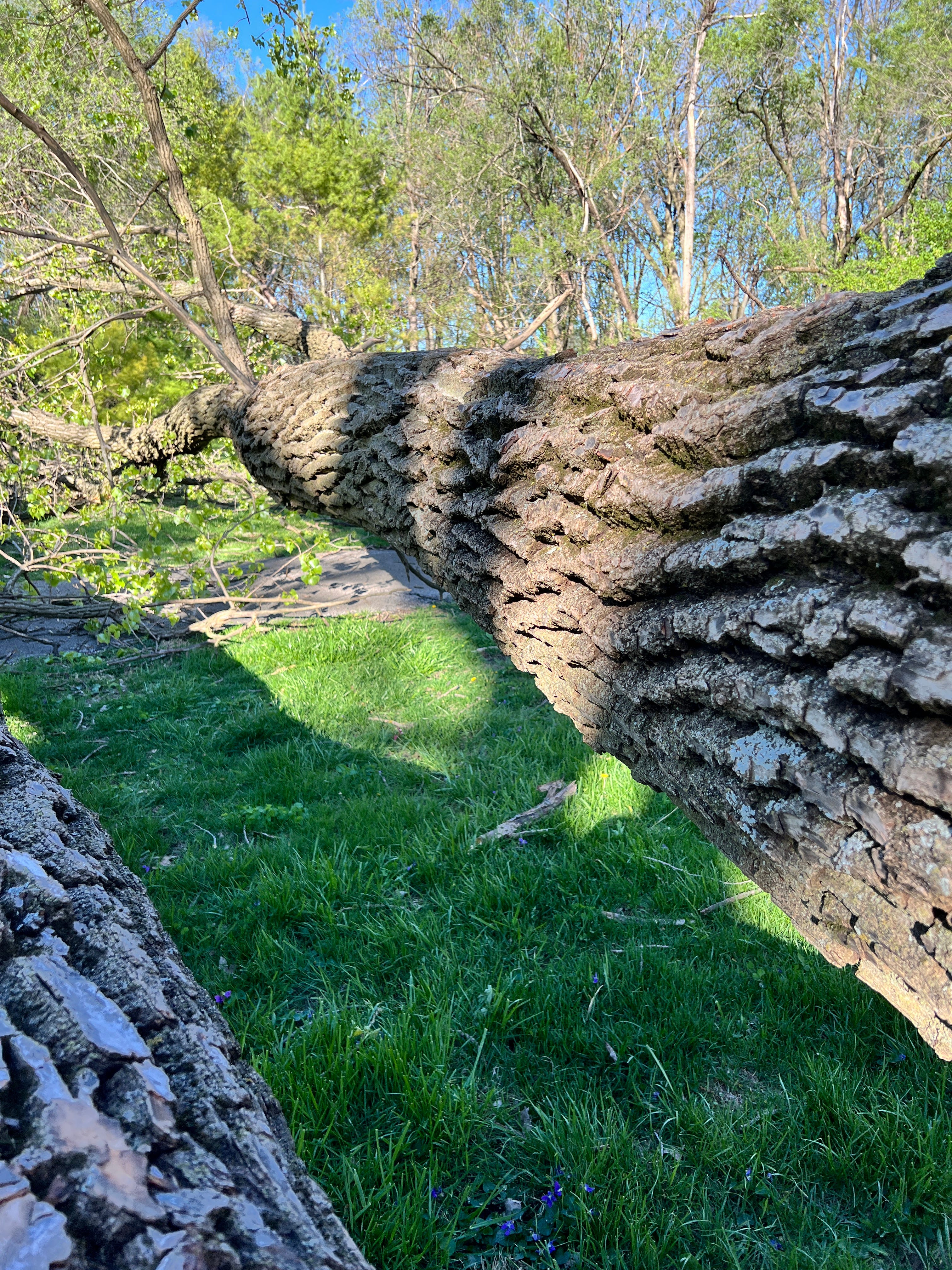
There had been four cottonwoods in this opening in the canopy, towering above the mowed grass at Hidden Creek Park in Normal, Illinois. Now there were three. The fourth had come down on a Friday night in April, when a tornado tracked across the west side of town just before nine o’clock, and a century of patient growth, ring on ring, fractured in a single gust. The cottonwood crashed with a sound few people heard, because the storm was louder than the breaking.
I knelt at the trunk and ran my hand along the deeply furrowed bark, soft with lichen in the seams. Tears welled up in my eyes.
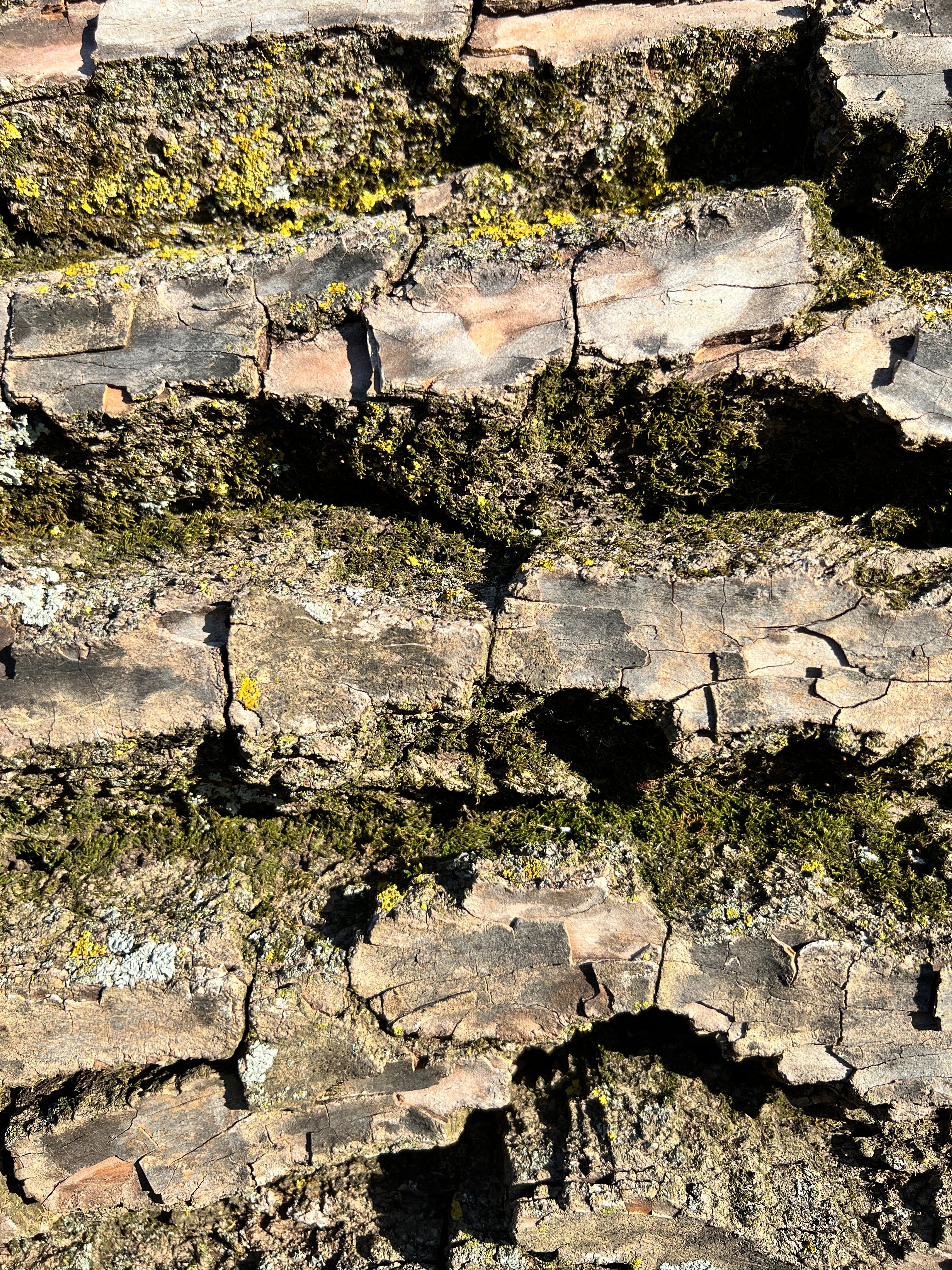
A few weeks prior, I heard actor Sean Bean (aka Boromir) say on his birdwatching podcast that birdwatching is a party that never ends. I love that line. It inverts everything we are told about quiet attention. Once you start to notice, the world doesn’t just hold a celebration—it is the celebration. The robin at sunrise, the warbler in the catkins, and the wind moving through new leaves are all part of it. Even the cottonwood lying on the ground before me was part of it. Standing at that broken root plate, I understood for the first time that the party does not stop when something falls. The world still sings through fallen giants.
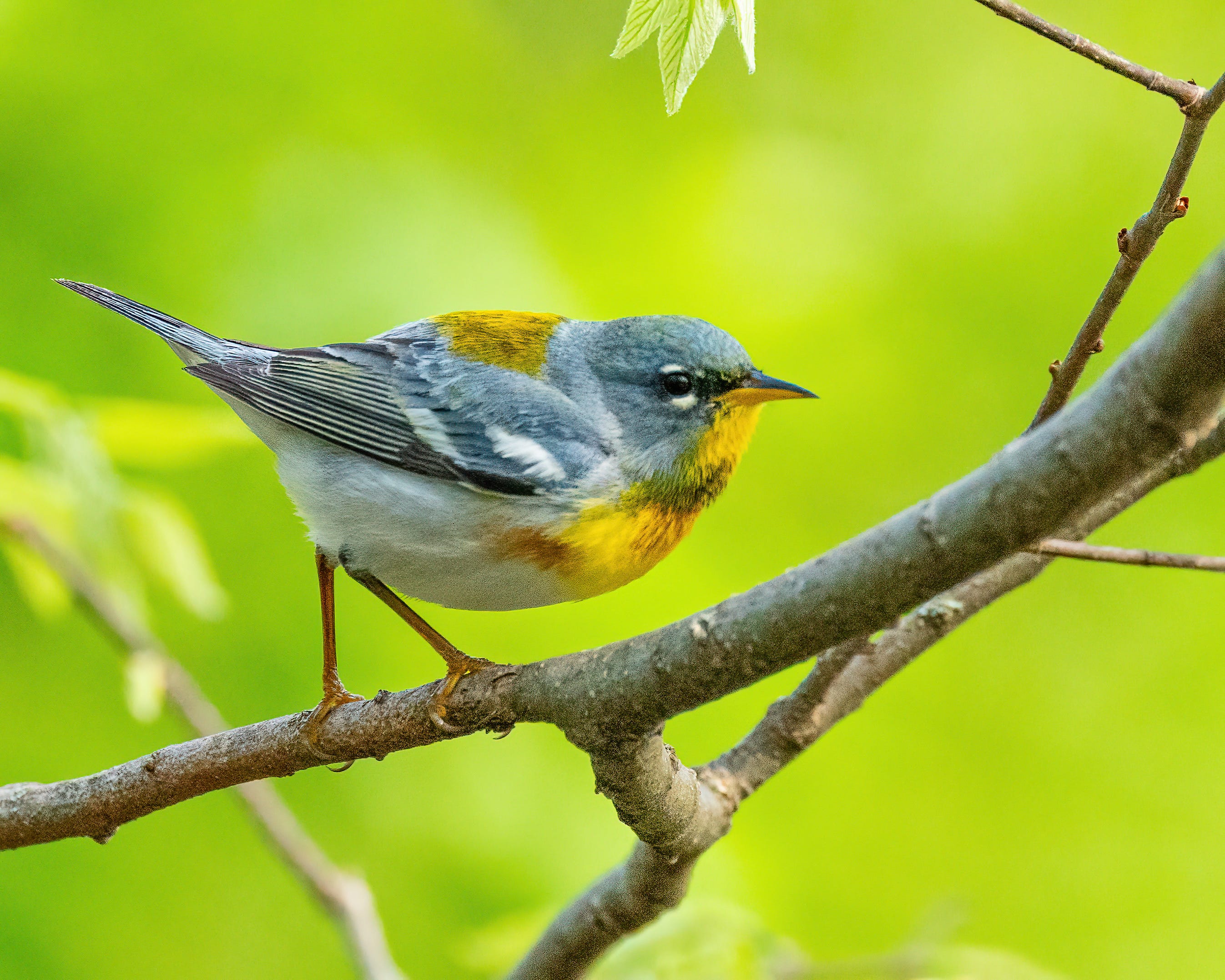
The cottonwoods were here long before any of our names for them. They were here when the rivers had different names, in tongues that have no living speakers now. The Lakota called them waǧáčhaŋ, the sacred talking tree. The Cheyenne, the Pawnee, and many other peoples of these waters had their own words and their own stories for the cottonwood, all of them rooted in the same recognition: that the leaves, with their flat petioles catching every breath of wind, make a soft running speech that you do not so much listen to as become quiet inside of. In May, the speech becomes a symphony. Warblers arrive—Yellow-rumps, Tennessees, and Northern Parulas—gleaning insects from the catkins. This music is sacred. I stopped under this tree many times. In birder vernacular, it was a birdy tree. The other three still stand, and I am more grateful than ever for their presence.
By the next day, the fallen Cottonwood had taken on a new role. Children walked the length of the trunk like gymnasts on a balance beam while their father watched with practiced, pretend indifference. Teenagers on longboards climbed the trunk, jumping and hauling themselves up, treating a rearranged piece of the world as something they could use. My wife and I walked over to them to show them the Merlin app. As the birds sang, the screen lit up: Yellow-rumped Warbler. Tennessee Warbler. House Wren. The air around the fallen tree became legible as a conversation that had been going on the whole time. The boys leaned in, caught off guard by the world, asking which bird was which. The cottonwood lay there, still talking.
Walking down the trail, a three-year-old boy stopped me. He looked at the fallen giant with wide eyes and shouted, “Can. I. Climb it!” It was more an announcement than a question. Before I could offer a “grown-up” reply, he was gone, sprinting toward the trunk. By the time I looked back, he was standing at the highest point, surveying his domain. He didn’t see a fallen tree; he saw the best thing that had happened in his park all spring. The cottonwood was singing, and the boy had joined the duet.
The eastern cottonwood, Populus deltoides, is a keystone species. A single mature tree holds an entire local food web together. Somewhere between 249 and 366 species of butterflies and moths lay their eggs on its leaves, a count matched only by the oaks. These caterpillars are the protein warblers need for their journey from South America. The cottonwood meets them where they land; the catkins draw insects, the insects feed the warblers, and the warblers fly on. It is a vertical economy and a reliable shelter.
So it matters what happens to the three that remain. Cottonwoods are tough, but they cannot withstand being mowed to the trunk. When we mow over their shallow feeding roots every week, we slowly kill them. A simple fix exists: a ring of wood chip mulch extended out toward the branches. It protects the roots, feeds the soil, and saves the park department from unnecessary labor. It gives the tree another century of life.
I have been working with the Town of Normal Parks Department for over a decade. They have been quiet partners the whole time. Every spring they deliver giant piles of wood chip mulch to the Refuge Food Forest. They mow the grass between the plants when we cannot keep up with it. They built us an arbor and a small shed for storing tools. They ran a waterline so the trees would not die in the dry summers. This year they tilled new beds for serviceberry, the kind of native fruiting tree that feeds the birds and the people of Normal in the same season. None of this is glamorous work. None of it makes the news. But for ten years they have been showing up with the equipment and the labor that makes the food forest actually function, year after year, and the food forest is what it is because of them.
The Constitution Trail tells a similar story. There is a Y intersection on the trail where a former dump has been cleaned up and replanted entirely with native plants. They built a fifty-foot stream that runs through the heart of it, beautifully landscaped, the kind of small constructed waterway that takes real money and real thought to put in place. It is one of the prettiest spots in town. People want to hang out there. They want to take pictures and sit by the water. And the parks department closes it off during peak migration, every spring and fall, because the birds need it more than the photographers do for those few weeks. That is a parks department that has internalized the natural areas case.
Normal also earned its Bird City Illinois certification in 2025, which required a sustained effort across departments to demonstrate genuine commitment to bird-friendly land management. That certification did not come from nowhere. It came from years of people inside the parks department choosing the longer view, the harder maintenance protocol, the species-conscious decision when the easier choice was available.
The people who use parks the way I do — for walking, for birding, for sitting quietly on a bench at sunset, for finding shelter from the noise tend to be quiet by temperament. Our pleasure in the park is not the kind that naturally generates committees. We do not form leagues for solitary morning walks. We do not have boards. We do not show up at town meetings with placards. We come alone, or with a child, or with a phone listening for warblers, and we leave without filing a comment. This is who we are. There is nothing wrong with us. But it does mean that when the parks department asks for input on what a park should be, the loudest voices are the ones with the most institutional muscle behind them. The sports leagues show up. The youth basketball coalition shows up. The men who play softball every Tuesday night show up. They are a small fraction of the park’s users, but they are the vast majority of the public comment.
Right now, the Town of Normal Parks Department is asking. They have an online survey that has gone out through social media and email. They are hosting listening sessions with focus groups. They want to know what the community wants the parks to be over the next decade. And the survey will tell them exactly what we let it tell them. If the responses come back dominated by the same vocal minority, the master plan that gets written will reflect that. The natural areas section of the proposal we have built will land on a parks department that wants to act on it, but they will only be able to act as far as the input gives them cover to go.
So here is the small specific thing I am asking. Take a few minutes to tell your parks department what your morning walks mean to you. Tell them you would rather have a hiking trail than another soccer field. Tell them you want the warblers to have refueling stations and the children to have fallen trees to climb. Tell them about your favorite places to watch birds. The parks department is not going to know any of this unless you tell them, and they need to know. If you can manage a listening session, even better — show up, sit in the back, say one or two true things about what the park gives you. You do not have to be eloquent. You do not have to speak for ten minutes. You just have to be there to be counted.
If you are reading this in another town, the same logic almost certainly applies. Most parks departments are taking some kind of public input most of the time. Find yours. Take five minutes to look it up. Then take twenty minutes to fill it out. The quiet majority has been quiet for so long that the institutions have largely forgotten we exist, and the work of remembering us begins with us speaking up just barely loudly enough to be heard.
The data is on our side. Fifty-eight percent of Americans participate in nature-based recreation, while only nineteen percent play organized sports. There are roughly a hundred million bird-watchers in the United States, and the fastest-growing demographic in outdoor recreation is those over sixty-five. Yet our parkland, like most parkland across the Midwest, is built almost entirely for the nineteen percent. We aren’t asking the parks department to choose nature over sports, but to recognize that natural areas are the missing half of the equation. The cottonwoods sing in your town the same song they sing in mine. They have been singing it longer than any of our quarrels, and they will sing it after we have settled them or set them aside.
Our proposal is linked on the Easy By Nature Substack in three versions: a two-page summary, a six-page brief, and a full thirty-six-page document. The plan makes the case from many directions, because the case is genuinely multidimensional. It shows how reallocating maintenance dollars from weekly mowing of unused turf into native plantings can fund three to four new Natural Areas Technician positions with no new tax burden, just a smarter use of money the town is already spending. It documents the workforce angle, where the natural amenities that attract and retain the kind of educated young residents that ISU, Rivian, and State Farm depend on are exactly the amenities that natural areas provide. It addresses the demographic reality that our town’s commissioned study found an aging population pointing toward eventual stagnation, and shows that the fastest-growing outdoor recreation demographic in the country is now the sixty-five-and-older cohort, who want hiking trails and bird-watching and quiet places to sit, not new soccer fields. It cites the research on home values near natural areas, which consistently shows measurable increases in adjacent property values when parks are restored and trails extended, generating tax revenue that partially or fully offsets the cost of the investment.
It treats stormwater management as the natural areas opportunity it actually is, where prairie and wetland restoration are among the most cost-effective tools available to a municipality. It builds on the ten-year proof of concept of our Refuge Food Forest to propose a network of similar plantings across the parks system. It proposes formalizing the Sugar Creek Greenway as a connected natural corridor through town. It treats the question as the comprehensive civic decision it actually is: not just an environmental preference but a fiscal, demographic, and economic strategy for the next generation of life in this town. The data arrives from enough angles that by the end the case for natural areas no longer feels like advocacy. It starts to feel obvious.
While the plan is for our town, the numbers are the same everywhere. Human nature is universal. If we start pressing the same case, the default will move.
This brings me back to the fallen cottonwood. My request is simple: leave it. Remove the smaller branches for safety, move parts that block the path, but leave the main trunk in the grass. A fallen tree is a better play structure than anything we could design. Children will build forts in its limbs for a decade until the trunk softens back into the soil. The tree does not stop being habitat when it falls; the party simply continues at a different scale.
The cottonwood brought the sky to the ground. That is the gift the storm gave us. We don’t need to wait for a storm to let our own boundaries soften — the boundaries between worldviews, or between us and nature. These divides are inventions. The cottonwood, the wind, and the warbler do not know about them. The fallen tree shows us how to merge high and low, inviting us to come to the edge of a rigid boundary and let it relax.
The wind that tore the tree from the ground and the wind that whispers through leaves are the same breath at different speeds. This breath asks us one question: Are you listening? Many of us are. We are the ones with binoculars at sunrise, the ones who can pick a Cape May out of a cottonwood by ear, the ones who would rather be in the park than anywhere else on a May morning. We have been listening for years. And yet something has been hardening in us anyway. There is a kind of shell we have grown around ourselves without meaning to, the way certain creatures grow protective layers from whatever is at hand. We grew ours from disappointment. From accepting the noisy, degraded fragments of our parks as the only option. Our parks are loud. The trails run alongside busy roads. The natural areas are small and degraded. We have learned to take what we are given, and to be grateful for it, and to quietly let go of the vision of a quieter, larger, more peaceful way of being. That letting-go is the shell. It is made of calcified dreams.
Sometimes the wind has to come harder before we remember that the vision is real. The cottonwood has to fall. In the silence afterward, in the gap in the choir, we hear what we have been missing — not the warbler, because we never stopped hearing the warbler, but the conviction that the warbler deserves a quieter park to land in, and that we deserve a quieter park to find it in. The whisper can crack us open without devastation, reminding us that we are part of the song, and that the song deserves better than what we have been giving it. The song wants us to move, to dance right where we are. To let the rhythm of the tree move our feet, and our minds, and our imaginations. Our bodies have always known how to move.
Every parks director was once a child who loved being outside. The kid who collected leaves, who turned over rocks looking for salamanders, who climbed every tree in the neighborhood. That kid is still there, beneath the budget spreadsheets and the meeting agendas. They have been waiting for the rest of us to show up. The parks department has been doing its job. They have been showing up. Now we have to show up. And when we do, when the quiet majority finally fills out the survey and sits at the listening sessions and tells them what the park gives us, the parks department will hear the chorus they have been waiting for the whole time.
Culture change is the patient accumulation of small shifts: one mulch ring, one fallen tree left in place, one line item in a budget, one survey response from someone who has been quiet for a long time. The food forest started this way. The migration oasis started this way. The Bird City certification started this way. The next decade will be made of more of the same. The three remaining cottonwoods are leafing out now—the setup for this year’s guests. The sapsuckers will find another tree, and the forest will absorb its losses. But I will keep walking past the place where the fourth one stood. I want to walk past the trunk itself, watching it soften as woodpeckers work the wood. The choir sings on, three voices instead of four, and the fallen one is still part of the music.
A tree fell. The party continues. The world is singing.
soft running speech is such an apt name for cottonwood. It has always been a spiritual tree for me as well. I feel like the voice of God speaks through it!
I had never seen a Parula before. What a beautiful bird!
I first saw the concept of a food forest in South Carolina a few years ago on a private farm.
But what a great concept of offering the idea to local parks departments! I love it!
So perfectly lovely! Thank you. I feel your love and appreciation for nature in every word and it fills me with joy!